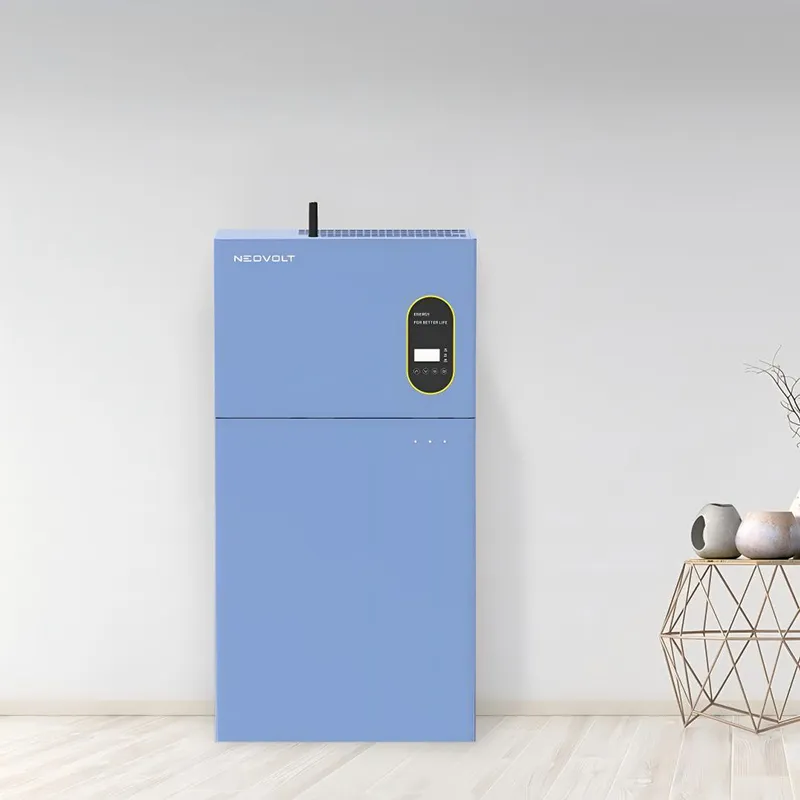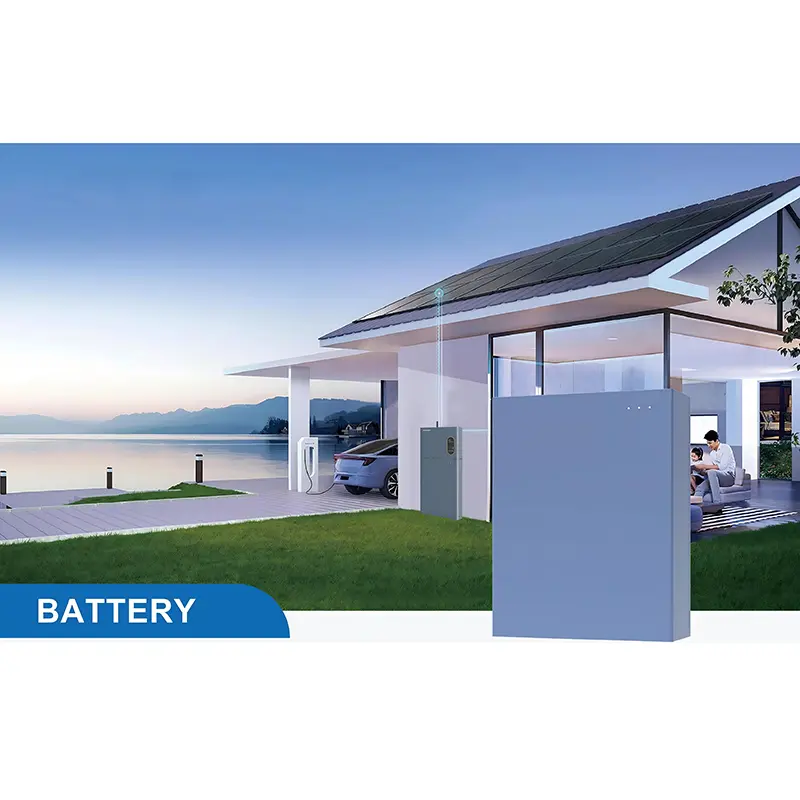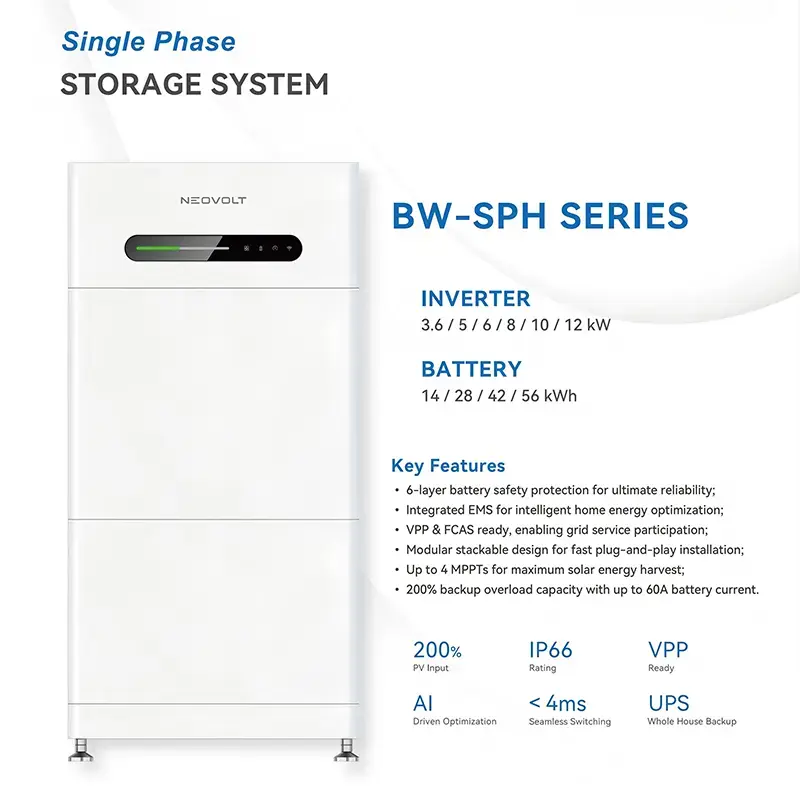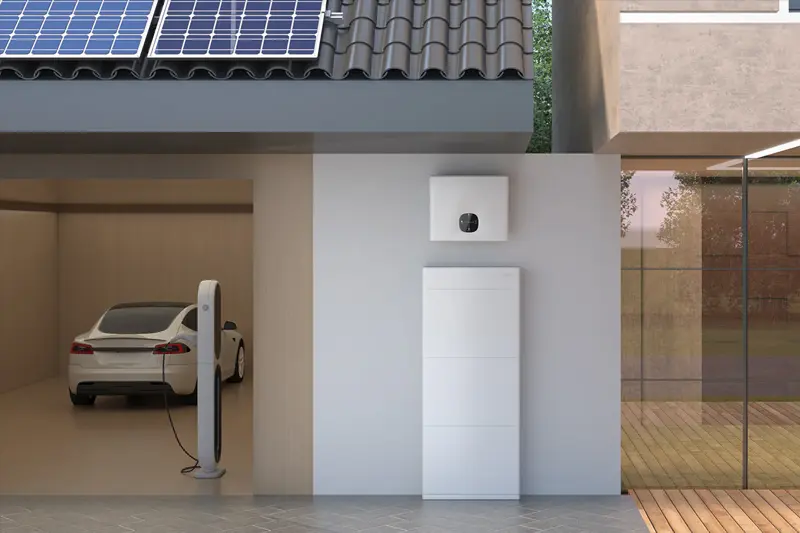

56kWh Stackable LiFePO4 Battery Module
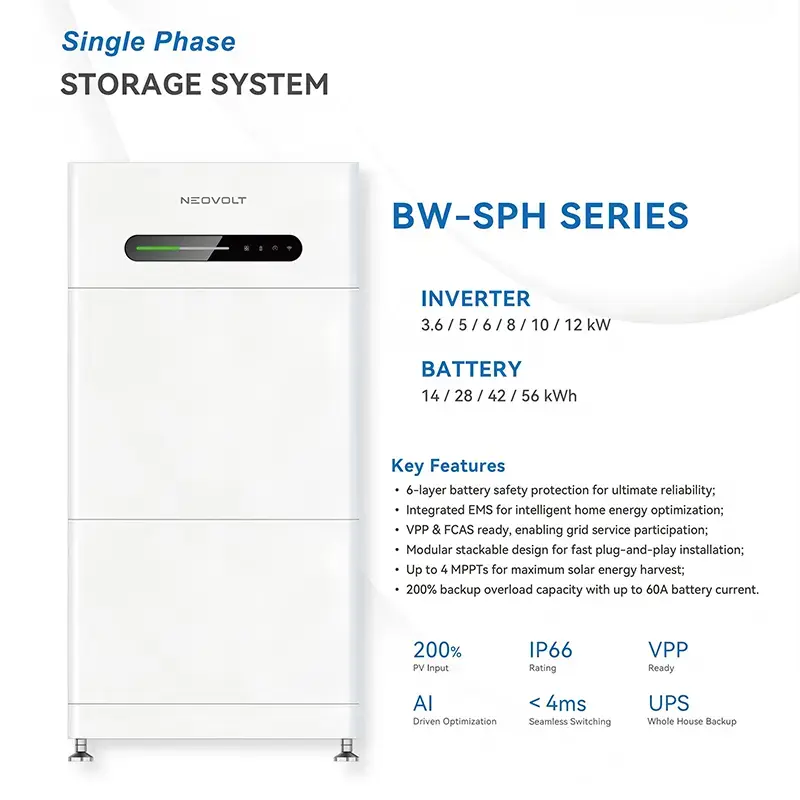
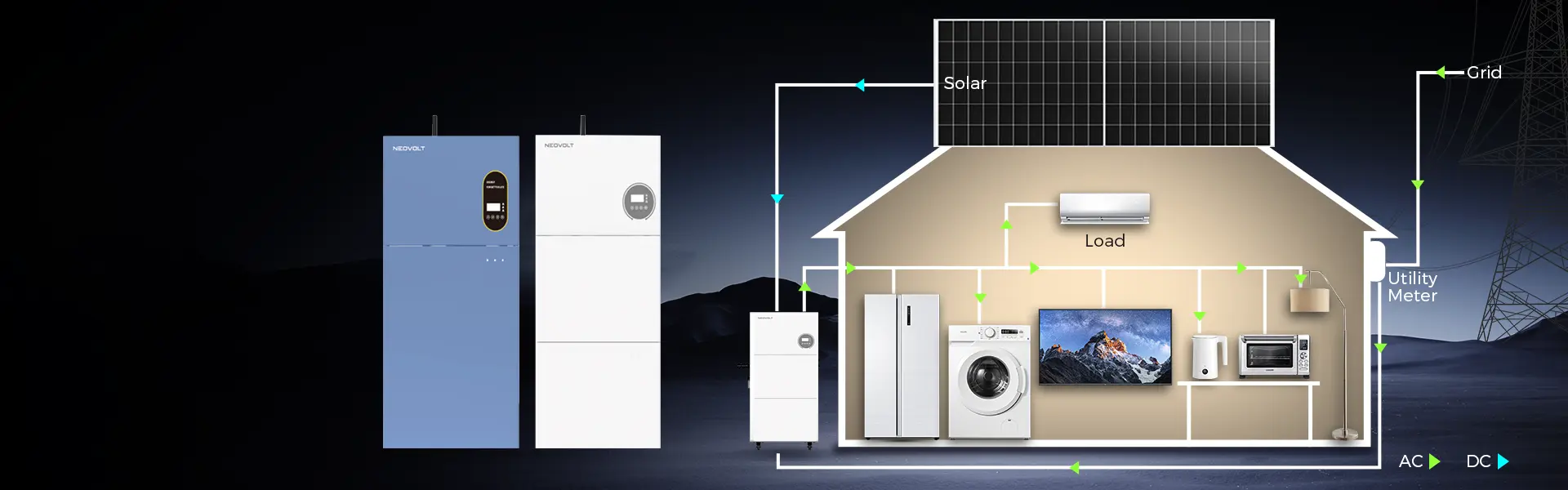
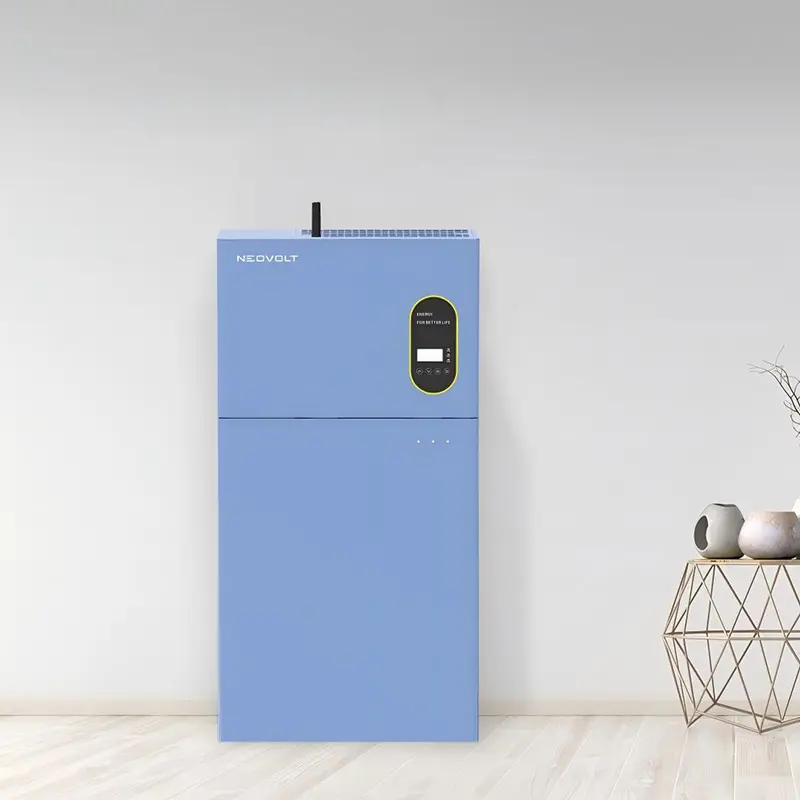
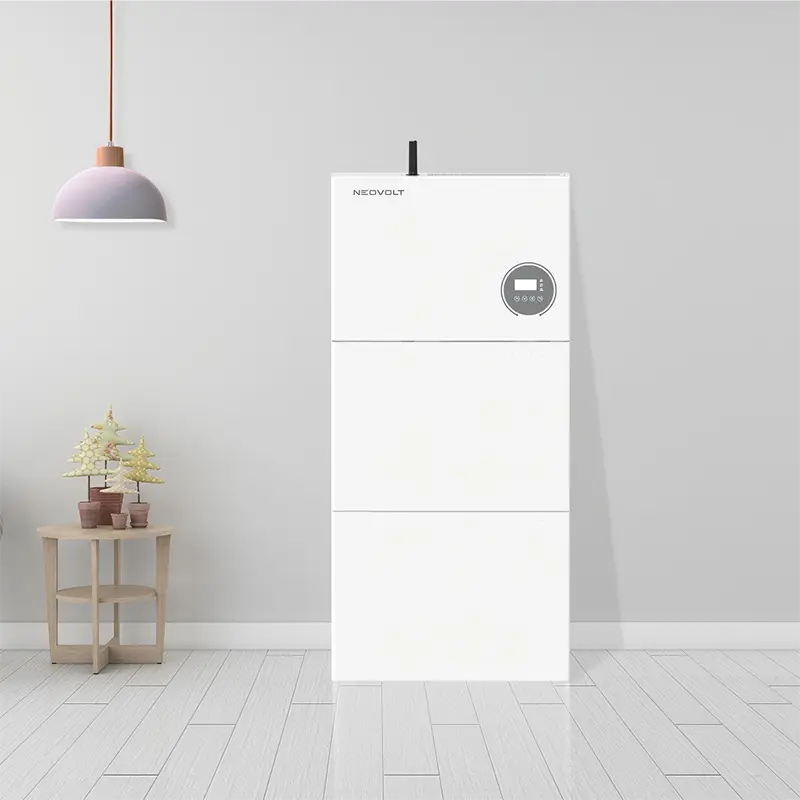
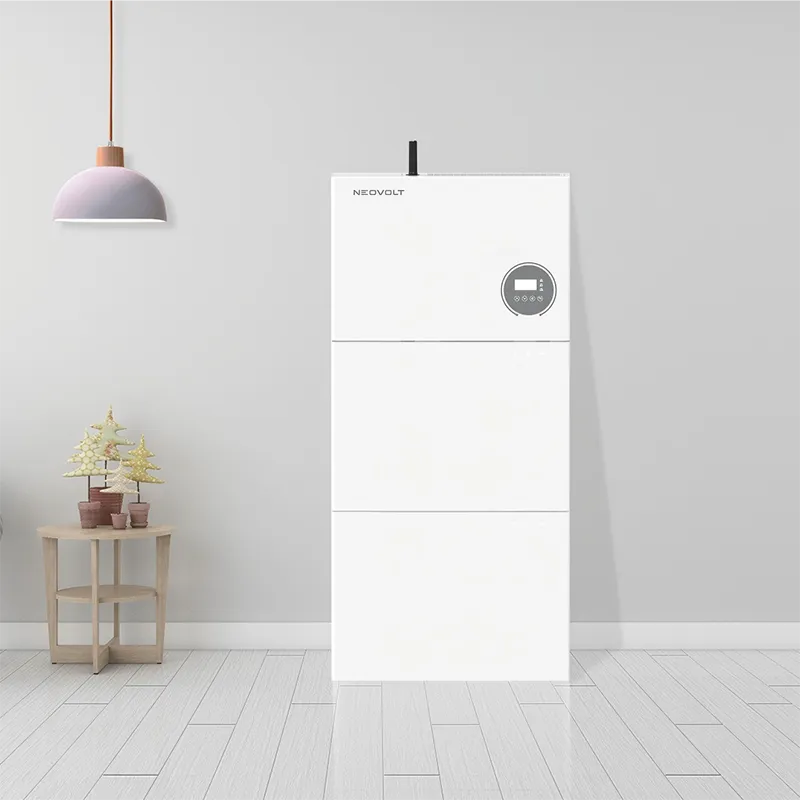
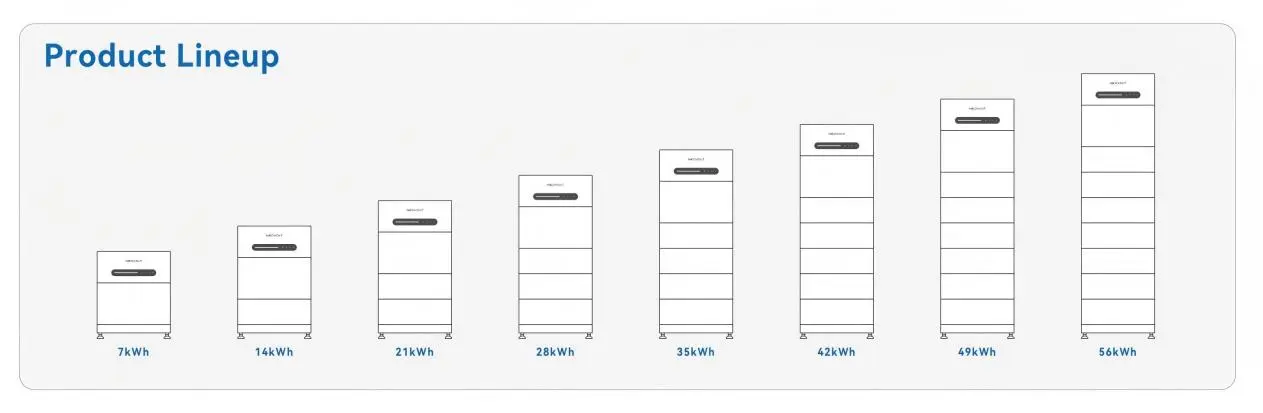
The Sinoah 56kWh Stackable LiFePO4 Battery Module is the largest-capacity energy storage solution in the NeoVolt range, delivering 55.14kWh of usable energy – enough to power a UK home for 5–7 days without solar input or charge two electric vehicles from empty to full. Manufactured by NeoVolt, a Chinese power electronics manufacturer with over a decade of lithium battery production experience, this 56kWh module is available in two configurations: four 14kWh units stacked together (G3 series) or eight 7kWh units stacked together (G4 series), both presenting a single integrated floor-standing enclosure.
As a trusted supplier to the UK market, Sinoah Energy stocks this battery module in our UK warehouse for fast delivery to installers and trade partners nationwide. Featuring genuine LFP chemistry, 8000+ cycle life, IP66 weatherproof rating, and self-heating technology for -20°C charging, the 56kWh Stackable LiFePO4 Battery Module delivers the ultimate capacity for UK homes with the highest energy demands–multiple EVs, whole-home backup, and true energy independence.
The Ultimate Capacity: When 56kWh Makes Sense
Not every home needs a 56kWh battery. But for those that do, the 56kWh module is transformative. The question installers and homeowners should ask:“What’s my annual electricity consumption, and what do I want the battery to achieve?”
A 56kWh battery is suited to homes with:
·Annual consumption above 8,000kWh–large homes, heat pumps, multiple EVs
·Whole-home backup requirements–keeping everything running during extended outages
·Energy independence goals–minimising grid import year-round
·Future expansion plans–additional EVs, outbuildings, or home offices
With 55.14kWh of usable energy, the 56kWh module stores the equivalent of a small electric car’s battery pack. A full charge on Octopus Go (9p/kWh) costs £4.95–and provides enough stored energy to cover an average UK home’s entire weekly consumption.
Two Configurations:
The 56kWh Stackable LiFePO4 Battery Module is available in two configurations, depending on the series:
|
Series |
4×14kWh Modules |
8×7kWh Modules |
|
Model |
BW-BAT-14S4-H |
BW-BAT-0758-H |
|
Total rated energy |
56.26kWh |
56.26kWh |
|
Usable energy |
55.14kWh (98% DoD) |
55.14kWh (98% DoD) |
|
Total weight |
416kg |
470kg |
|
Dimensions |
690×1925×240 mm |
690×2195×240 mm |
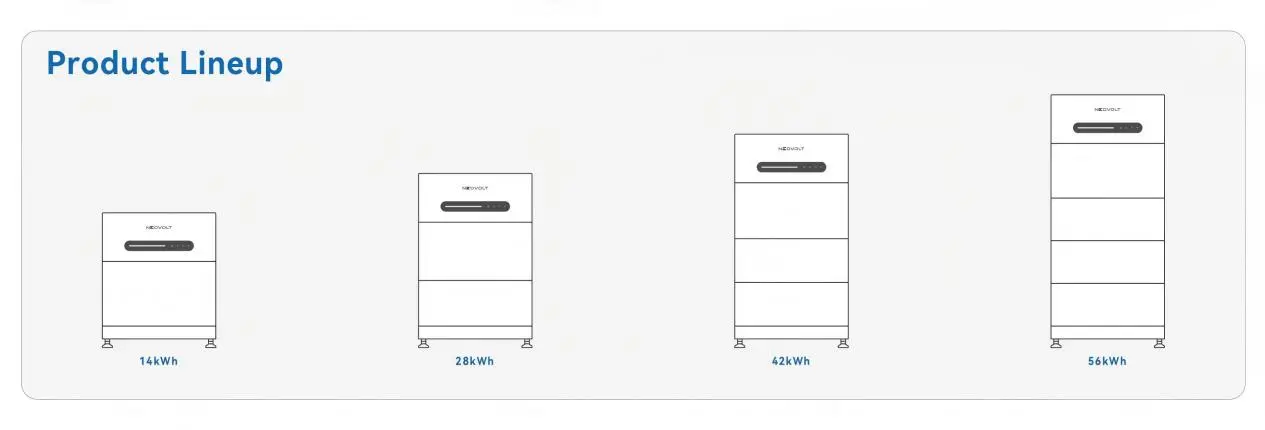
Both configurations deliver the same usable capacity–55.14kWh. The difference is in the build. The G3 configuration uses four larger modules, making it significantly lighter (416kg vs 470kg) and shorter (1925mm vs 2195mm)–both practical advantages for installation in spaces with height or weight restrictions.
Why Choose the 56kWh Module?
1. True Energy Independence
With 56kWh of storage, a home with a 10kWp solar array can store an entire summer day’s generation and still have capacity for overnight consumption, EV charging, and a buffer for cloudy days. During summer months, grid import can drop to near zero. During winter, a full overnight charge on the cheap rate covers 5-7 days of normal consumption.
2. Whole-Home Backup, Not Just Essentials
The 56kWh Stackable LiFePO4 Battery Module provides whole-home backup capability that smaller batteries cannot match. During a grid outage, the battery keeps everything running–heat pump, EV charging, home office, cooking appliances, entertainment systems–for 3-5 days. With the inverter’s sub-4ms UPS switching (G4 series), there’s no interruption to sensitive electronics.
3. Two EVs, One Battery
For households with two electric vehicles, the 56kWh battery charges both cars from empty to 80% in a single cycle–adding approximately 160-200 miles of range per vehicle. For daily commuting, the battery covers a full week of driving on a single charge.
4. Peak Tariff Arbitrage at Scale
With 56kWh of capacity, a household on Octopus Go can store 56kWh overnight at 9p/kWh and discharge during peak periods at 28p/kWh, generating a gross saving of £10.64 per full cycle. Over a year of daily cycling, that’s approximately £3,800 in tariff arbitrage savings alone–before solar self-consumption is considered.
Built for UK Winters: Self-Heating and IP66 Protection
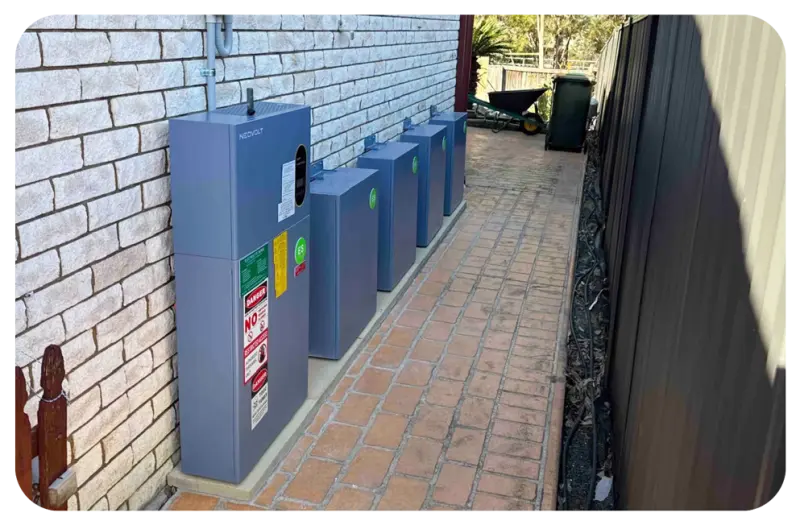
The 56kWh Stackable LiFePO4 Battery Module carries an IP66 ingress protection rating–fully protected against dust and powerful water jets from any direction. It can be installed outdoors on external walls, in carports, or in garden buildings without concern about driving rain, snow, or coastal salt spray.
The module features self-heating technology that enables charging at temperatures as low as -20°C. In a UK winter, this ensures the battery remains operational throughout the year–even in exposed installations.
From an Installer’s Perspective: Two Configurations, One Installation
We asked a UK MCS-certified installer who has fitted large-scale residential systems about the 56kWh module.
“The 56kWh module is substantial–416kg for the G3 version, 470kg for the G4. But the floor-stacked design makes it manageable with two people and a pallet jack or lifting aid. The G3 version is the practical choice–54kg lighter and 270mm shorter than the G4. In most garages and utility rooms, that extra height matters.”
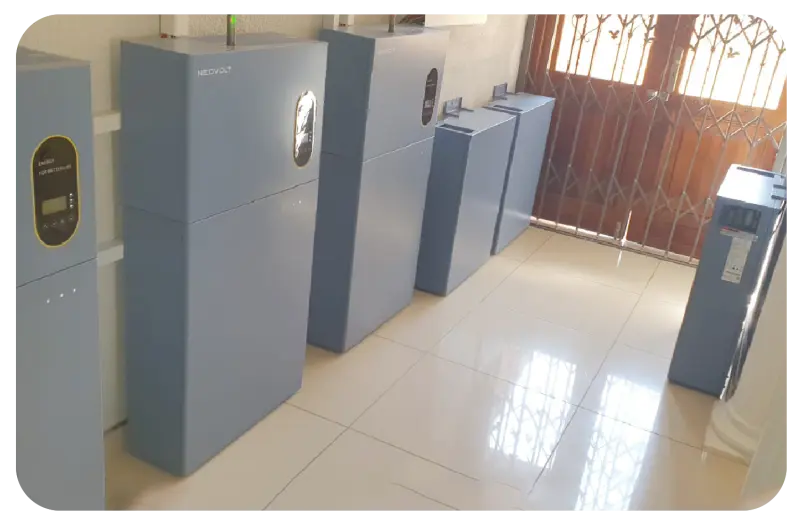
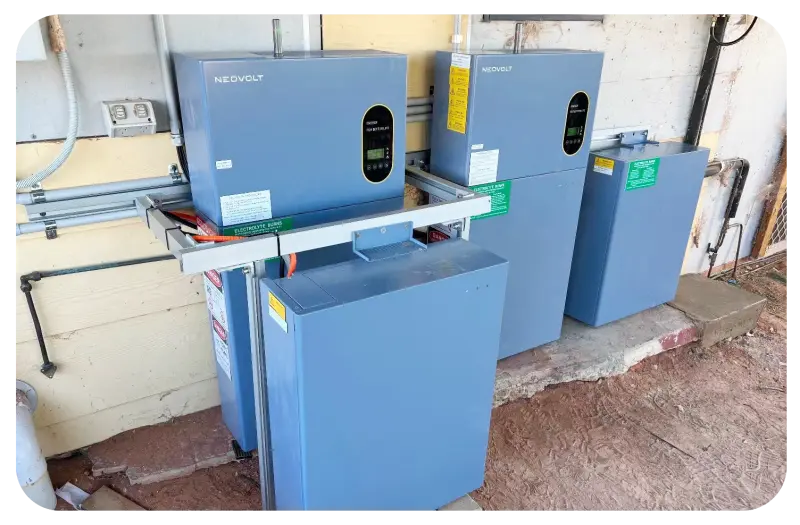
Weight and handling–The G3 version (416kg) is significantly lighter than the G4 (470kg). Both require two people and mechanical assistance for positioning. The 690mm width and floor-stacked design mean no wall-mounting complications.
Height considerations–The G3 version stands 1925mm tall; the G4 version stands 2195mm tall.The G3 configuration is better suited for spaces with height restrictions.
Cable management–Single power and communication cable sets–the internal connections are pre-wired, reducing on-site wiring time.
Commissioning–The inverter’s LCD display and NeoVolt App auto-detect the 56kWh configuration. Commissioning adds less than 30 minutes.
Future service–The modular design means individual 14kWh or 7kWh sub-modules can be serviced or replaced without taking the entire 56kWh system offline.
Real-World Application: The Energy-Independent Home
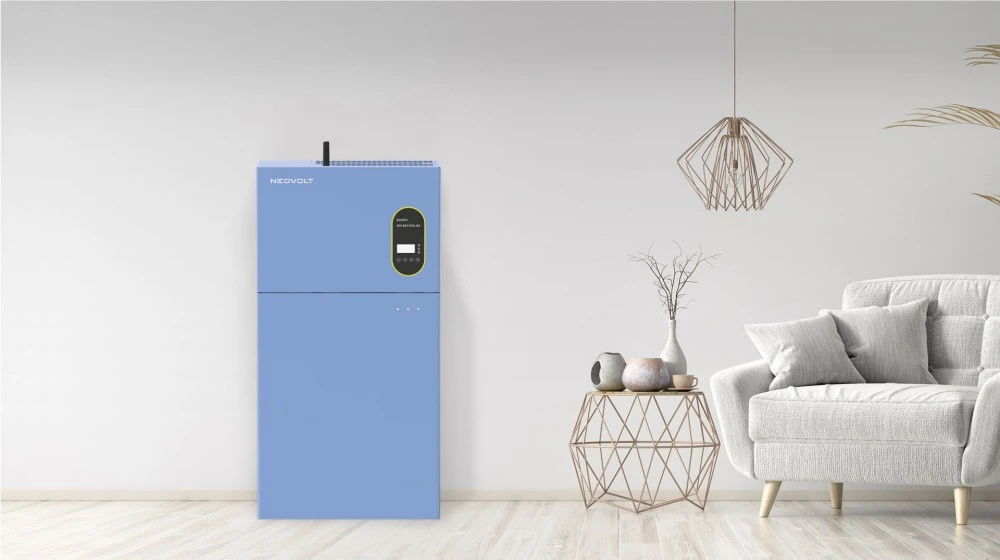
Consider a large 5-bedroom home in the South East with a 10kWp solar array, two electric vehicles (total annual mileage: 25,000 miles), an air-source heat pump, and a home office with high energy consumption. The household consumes approximately 12,000kWh annually.
The Sinoah56kWh Stackable LiFePO4 Battery Module transforms this home into a truly energy-independent property:
Summer scenario–The 10kWp array generates 40-50kWh on sunny days. The 56kWh battery stores the surplus (25-30kWh) for evening use, EV charging, and overnight heat pump operation. Grid import drops to near zero on sunny days. On cloudy days, the battery still has reserve capacity from previous days.
Winter scenario–Solar generation drops to 4-6kWh per day. The 56kWh battery charges overnight on the Octopus Go rate (9p/kWh) and discharges during peak periods (28p/kWh). The heat pump draws 8-10kWh overnight, and the two EVs draw 16-20kWh–the 56kWh battery handles this comfortably, with 20-30kWh remaining for daytime use. This covers 3-5 days of normal consumption without additional grid import.
Annual savings–Combined solar self-consumption and tariff optimisation deliver £2,000–£2,500 in annual bill savings.Its payback period is comparable to smaller systems, yet itsignificantlyboastsgreater energy security and independence.
Safety: Six Layers of Protection
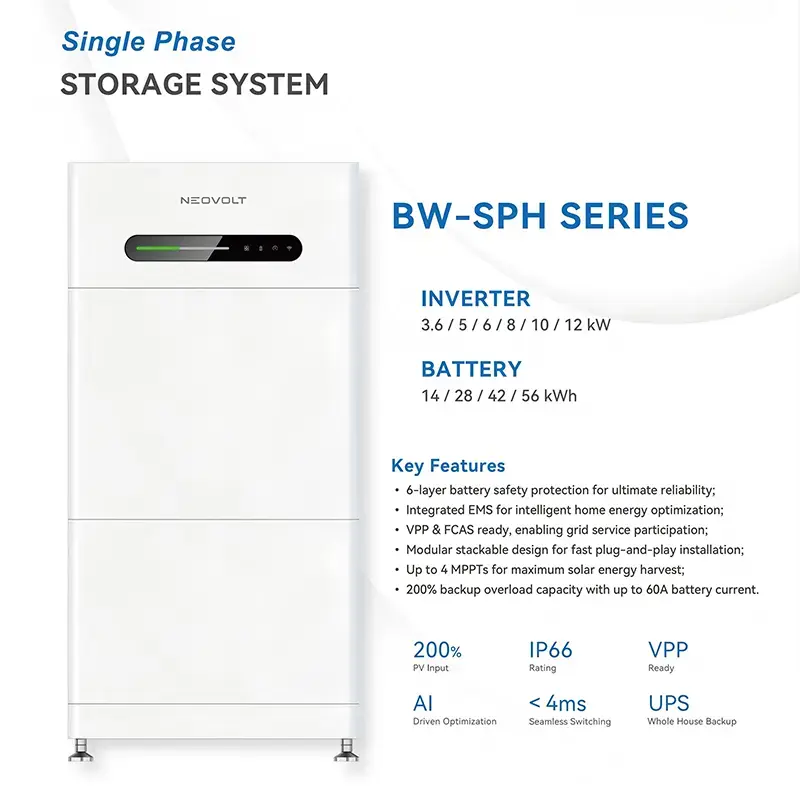
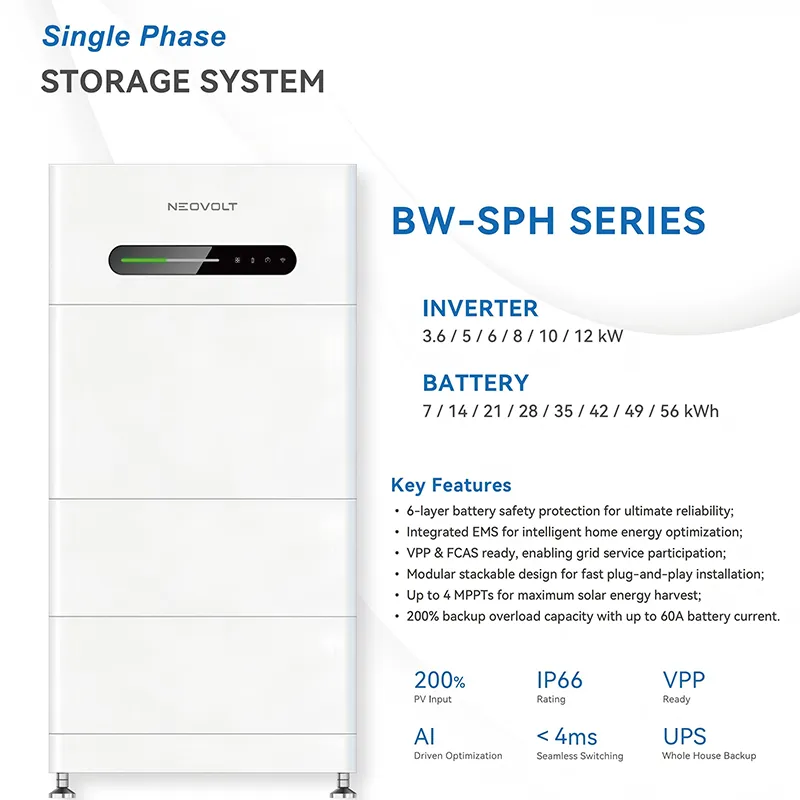
The 56kWh battery module incorporates a six-layer safety protection system:
1. Cell-Level Protection–Each prismatic LFP cell is individually monitored for voltage and temperature.
2. Module-Level BMS–The built-in Battery Management System balances cells, prevents over-charge and over-discharge, and communicates faults to the inverter.
3. Pack Over-Voltage / Under-Voltage Protection–Automatic disconnection if voltage strays outside the 200-500V operating range.
4. Temperature Monitoring–Multiple sensors across the module detect over-temperature conditions.
5. Short Circuit and Over-Current Protection–The BMS responds to fault currents within milliseconds.
6. Communication Redundancy–CAN bus provides real-time data to the inverter; if communication is lost, the system defaults to safe mode.
Technical Specifications
| Battery Model | BW-BAT-14S1-H | BW-BAT-14S2-H | BW-BAT-14S3-H | BW-BAT-14S4-H |
| Rated Energy (kWh) | 14.06 | 28.13 | 42.2 | 56.26 |
| Usable Energy(kWh) | 13.79 | 27.57 | 41.36 | 55.14 |
| Depth of Discharge(DoD) | 98% | |||
| Battery Type | LFP | |||
| Nominal System Voltage (V) | 350 | |||
| Operating Voltage Range (V) | 200~500 | |||
| Max.Input Current(System)(A) | 60 | |||
| Max.Output Current(System)(A) | 60 | |||
| Operating Temperature Range(℃) | Charging:-20<T<50/Discharging:-20<T<50 | |||
| Cycle Lifetime | 8000 | |||
| Cooling Method | Natural Convection | |||
| Noise Emission | <30 dB@1m | |||
| Communication | CAN | |||
| Weight(kg) | 128 | 224 | 320 | 416 |
| Dimensions(W×H×Dmm)* | 690*240*635 | 690*240*1060 | 690*240*1495 | 690*240*1925 |
| Ingress Protection | IP66 | |||
| Safety Standard | IEC 62619;IEC/EN 62040;IEC/EN 62477;(EU)2023/1542;SA TS5398 | |||
| Transportation | UN38.3 | |||
| System | ||||
| Max.Operating Altitude(m) | ≤3000(>3000 Derating) | |||
| Relative Humidity | 0~100%(Non-Condensing) | |||
| Mounting Method | Floor Stacked | |||
| Warranty | 10 Years | |||
| EMC | IEC/EN 61000-6-1;IEC/EN61000-6-2;IEC/EN61000-6-3;IEC/EN 61000-6-4 | |||
| Battery Model | BW-BAT-07S1-H | BW-BAT-07S2-H | BW-BAT-07S3-H | BW-BAT-07S4-H | BW-BAT-07S5-H | BW-BAT-07S6-H | BW-BAT-07S7-H | BW-BAT-07S8-H |
| Rated Energy (kWh) | 7.03 | 14.06 | 21.1 | 28.13 | 35.16 | 42.2 | 49.23 | 56.26 |
| Usable Energy (kWh) | 6.89 | 13.79 | 20.67 | 27.57 | 34.46 | 41.36 | 48.25 | 55.14 |
| Depth of Dischage(DoD) | 98% | |||||||
| Battery Type | LFP | |||||||
| Nominal System Voltage (V) | 350 | |||||||
| Operating Voltage Range(V) | 200~500 | |||||||
| Max Input Current (System)(A) | 60 | |||||||
| Max.Output Current(System)(A) | 60 | |||||||
| Operating Temperature Range(℃) | Charging:-20<T<50/Discharging:-20<T<50 | |||||||
| Cycle Lifetime | 8000 | |||||||
| Cooling Method | Natural Convection | |||||||
| Noise Emission | <30 dB @1m | |||||||
| Communication | CAN | |||||||
| Weight(kg) | 78 | 134 | 190 | 246 | 302 | 358 | 414 | 470 |
| Dimensions(W×H×Dmm)* | 690*240*480 | 690*240*725 | 690*240*970 | 690*240*1215 | 690*240*1460 | 690*240*1705 | 690*240*1950 | 690*240*2195 |
| Ingress Protection | IP66 | |||||||
| Safety Standard | IEC 62619;IEC/EN 62040;IEC/EN62477;(EU)2023/1542;SATS5398 | |||||||
| Transportation | UN38.3 | |||||||
A Note on Weight and Logistics
The 56kWh Stackable LiFePO4 Battery Module is a large and heavy piece of equipment. The G3 version weighs 416kg–equivalent to a small grand piano. The G4 version weighs 470kg. Installers should plan for mechanical handling–a pallet jack, lifting aid, or team of four for positioning.
The module arrives on a pallet and should be moved into position using appropriate equipment. For installations in basements or upper floors, structural reinforcement may be required. We recommend a site survey before ordering to assess access and floor loading.
Why Choose the 56kWh from Sinoah Energy
1. Largest Capacity in the Range–55.14kWh usable energy–the ultimate residential storage solution.
2. Two Configuration Options–Choose between G3 (4×14kWh, lighter and shorter) or G4 (8×7kWh, more granular).
3. Genuine LFP Chemistry–Prismatic LFP cells with verified 8000+ cycle life and safety certifications.
4. UK Stock, Fast Delivery–Sinoah Energy maintains inventory in our UK warehouse, meaning no shipping delays or customs clearance issues.
5. Factory Direct Pricing–Direct fromNeovolt’s manufacturing facility with over a decade of experience.
6. 10-Year Warranty–The longest warranty in the UK residential storage market.
7. Technical Support–UK-based team provides pre-sales consultation, installation guidance, and after-sales support.
8. Self-Heating for UK Winters–Charges at -20°C –a practical feature for UK installations.
9. IP66 Weatherproof–Suitable for indoor or outdoor installation in any UK weather.
10. VPP and FCAS Ready–Compatible with Virtual Power Plant and Frequency Control Ancillary Service programmes.
Ready to add the NeoVolt 56kWh stackable battery module to your product range?
Contact us and become a trade partner today and access competitive pricing, UK stock, and dedicated technical support.
FAQ:
Q1: What size home needs a 56kWh battery?
A: A 56kWh battery is for homes with annual consumption above 8,000kWh – typically large 5+ bedroom properties with heat pumps, two electric vehicles, home offices, or high-energy appliances. It's also ideal for homeowners seeking true energy independence – storing enough power to cover 5–7 days of normal consumption without solar input.
Q2: How much does a 56kWh battery cost to charge overnight?
A: On Octopus Go (9p/kWh overnight), a full 56kWh charge costs £5.04. At peak rates (28p/kWh), the same energy would cost £15.68. That's a gross saving of £10.64 per full cycle. Over a year of daily cycling, tariff arbitrage alone saves approximately £3,800 – before solar self-consumption is considered.
Q3: Can I start smaller and expand to 56kWh later?
A: Yes. The NeoVolt system is fully scalable. Start with 14kWh, add modules as budget allows or energy needs grow – 28kWh, 42kWh, then 56kWh. The modular design means no rewiring or system replacement – simply stack additional modules on top and plug in the pre-made cables. Future-proofing built in.
Hot Tags: 56kWh Stackable LiFePO4 Battery Module Manufacturer, 56kWh Battery Module Wholesale, Energy Storage Battery Supplier
Related Category
Send Inquiry
Contact Info
-
Address
Neo bankside, 50 Holland Street, London, SE1 9FU, United Kindom
-
Tel
-
E-mail
If you have any inquiry about a quotation or cooperation, please feel free to email or use the following inquiry form. Our sales representative will contact you within 24 hours.