100–300kWh Medium Commercial Storage
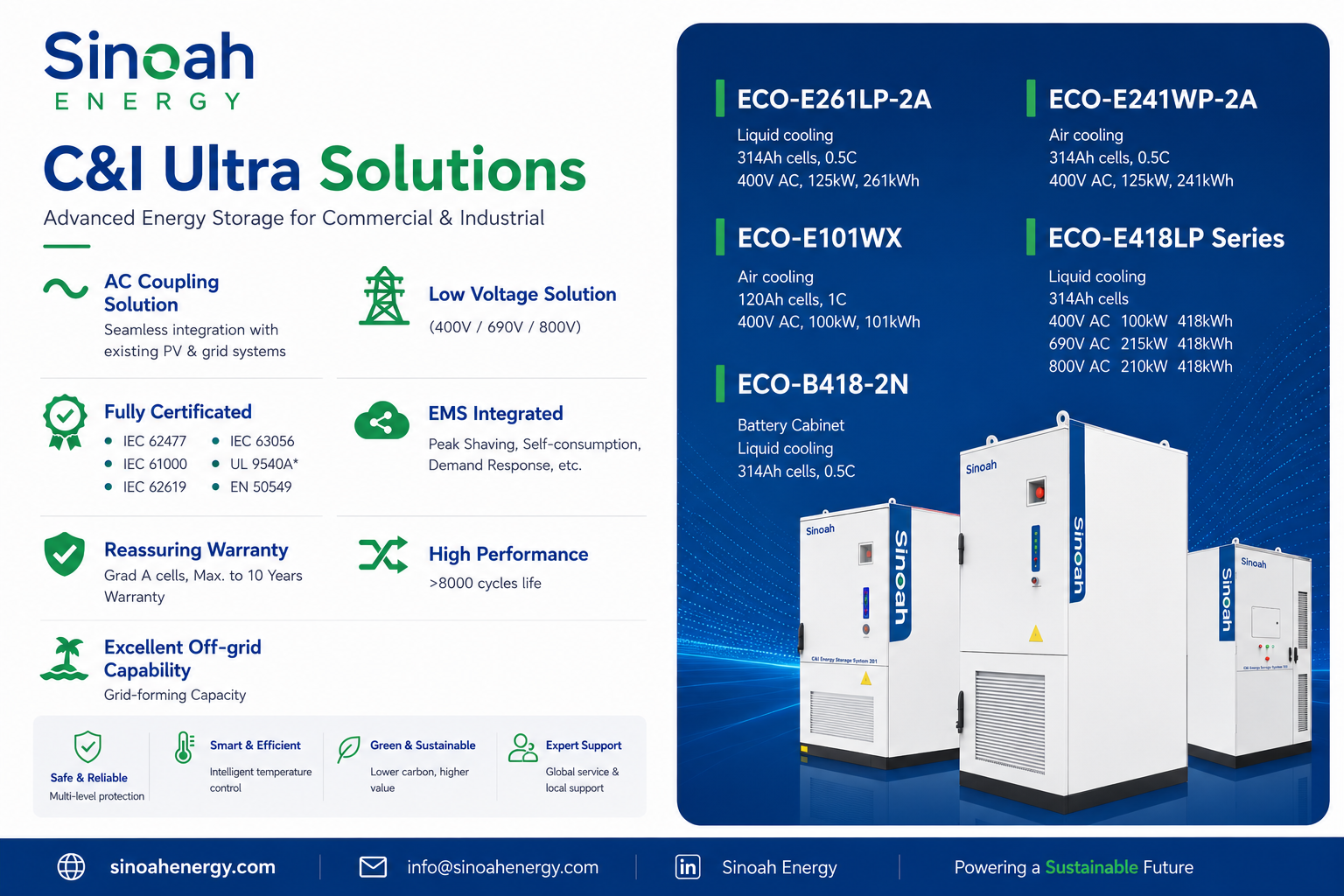
Sinoah Energy 100–300kWh Medium Commercial Storage systems are designed for businesses with higher and more variable energy demand, including farms, warehouses, hotels, manufacturing facilities, distribution centres, and EV charging hubs. This capacity range provides a practical balance between storage capacity, power output, installation requirements, and long-term energy savings for medium-sized commercial operations.
Manufactured in Sinoah Energy's advanced production facility in China, these commercial battery storage systems combine integrated BMS, PCS, EMS, and multi-layer fire protection with liquid or air cooling options. With 100–300kWh energy capacity and 100–125kW power output, the systems can support peak shaving, solar self-consumption, time-of-use energy management, EV charging load management, and backup power.
As a UK-based supplier, Sinoah Energy provides factory-direct pricing, UK warehouse availability, and local technical support. The modular architecture allows businesses to begin with an appropriate capacity and expand the system as energy demand increases, helping protect the initial investment while providing a scalable commercial energy storage solution.
Capacity Designed for Higher Commercial Energy Demand
1. 100–300kWh Storage Range
The 100–300kWh range is suitable for businesses that have outgrown small commercial battery systems but do not require a large utility-scale energy storage installation. Capacity can be selected according to daily electricity consumption, peak demand, solar generation, EV charging requirements, and backup load requirements.
2. 100–125kW Power Output
With power output options of approximately 100–125kW, the system can respond to substantial short-term demand increases. During configured peak periods, the battery can discharge to supplement grid power and reduce the site's demand peak.
3. Modular Capacity Expansion
The modular system architecture allows customers to start with a lower storage capacity and expand as electricity consumption grows. Additional battery capacity can be integrated without replacing the complete energy storage system, helping businesses protect their initial investment and plan capacity around future expansion.
Peak Shaving for Commercial Electricity Costs
1. Reduce Demand Peaks
Commercial facilities can experience significant short-term demand spikes when multiple machines, HVAC systems, refrigeration equipment, pumps, or EV chargers operate simultaneously. The Sinoah Energy system can discharge during configured high-demand periods to flatten the load profile and reduce reliance on grid electricity during peak conditions.
2. Support Demand Charge Management
Where electricity tariffs include demand-related charges, reducing the maximum recorded demand can contribute to lower electricity costs. Actual savings depend on the local tariff structure, load profile, battery capacity, operating strategy, and available charging windows.
3. Intelligent Charging and Discharging
The integrated EMS can coordinate battery charging and discharging according to electricity prices, site demand, solar generation, and predefined operating strategies. This allows the system to automatically respond to changing energy conditions instead of relying entirely on manual operation.
Liquid Cooling or Air Cooling According to Your Application
1. Liquid Cooling for High-Utilisation Applications
Liquid-cooled systems provide more uniform temperature control across battery cells and are suitable for applications involving frequent charging and discharging or high utilisation. Sinoah Energy liquid cooling solutions are designed to support long-term commercial operation with reduced thermal variation between cells.
2. Air Cooling for Simpler Applications
Air cooling provides a straightforward thermal management solution for commercial projects with moderate duty cycles. It can be suitable where system operating requirements do not justify the additional complexity of liquid cooling.
3. Select Cooling Technology Based on Duty Cycle
The choice between liquid cooling and air cooling should be based on battery utilisation, ambient conditions, installation environment, charging and discharging frequency, maintenance requirements, and project budget. Sinoah Energy can provide both configurations within the 100–300kWh category.
One Platform for Solar, Storage and EV Charging
1. Solar PV Integration
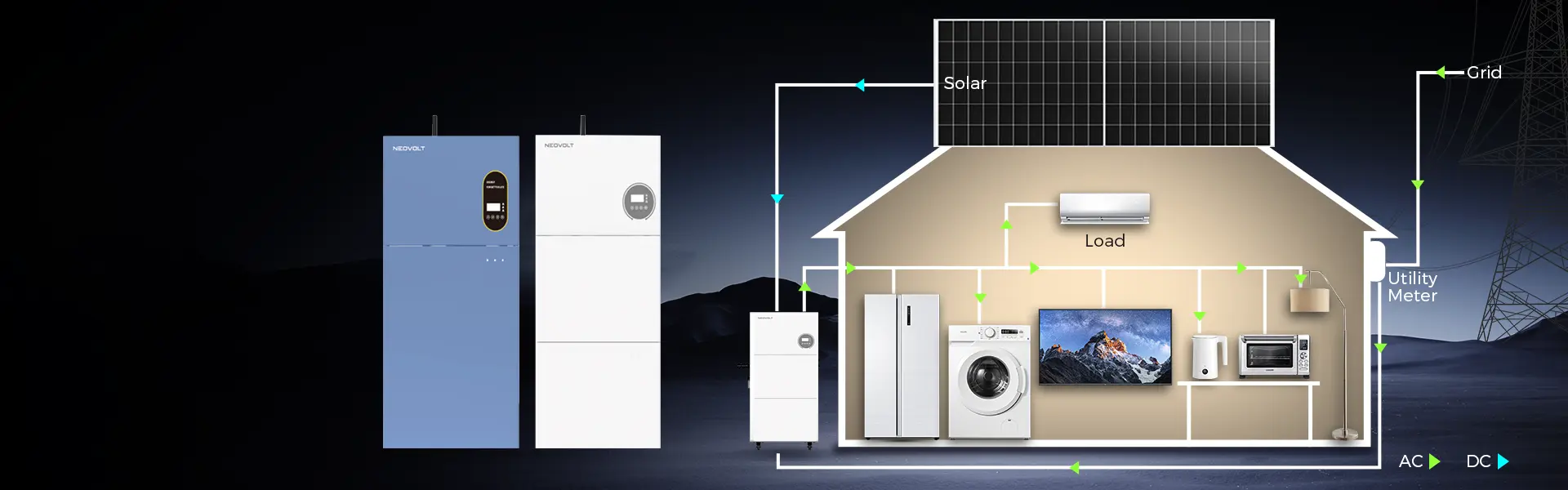
The system can be integrated with existing or new solar PV installations. Surplus solar generation can be stored in the battery and released when onsite electricity demand increases, improving solar self-consumption and reducing the need to purchase electricity from the grid.
2. EV Charging Load Management
Multiple EV chargers can create substantial temporary power demand. Sinoah Energy medium commercial storage can provide additional power during charging peaks, helping businesses manage EV charging loads and potentially reduce the need for costly grid capacity upgrades.
3. PV + Storage + EV Charging
For commercial sites combining solar generation and EV charging, the battery can act as an energy buffer between generation, grid supply, and vehicle charging loads. The integrated energy management strategy can coordinate these power sources according to site requirements.
Safety Designed into Multiple System Layers
1. PACK-Level Fire Protection
Depending on the system configuration, PACK-level aerosol or perfluorohexanone fire suppression can be integrated into the battery storage system. This provides an additional layer of protection around the battery modules.
2. RACK-Level Protection
RACK-level protection works together with the PACK-level safety design to provide additional monitoring and response capabilities across the battery system. The multi-layer approach helps address thermal and electrical risks at different levels of the energy storage architecture.
3. Intelligent BMS Monitoring
The Battery Management System continuously monitors important battery operating parameters, including voltage and temperature. Over-voltage and over-temperature monitoring helps identify abnormal operating conditions and supports appropriate system protection strategies.
Real-Time Energy Management and Remote Operation
1. Open-ECO EMS
Sinoah Energy medium commercial storage systems use the Open-ECO Energy Management System to monitor and manage energy storage operation. The platform can execute predefined charging, discharging, peak shaving, and energy optimisation strategies according to the requirements of the commercial site.
2. Web and App-Based Monitoring
Operators can access system information through web and mobile interfaces to monitor energy flows, operating status, charging and discharging activity, and system performance without being physically present at the installation site.
3. Remote Control and Fault Alerts
Remote access allows authorised users and service teams to adjust operating schedules and review system information. Fault alerts can help identify abnormal conditions promptly and support faster maintenance response.
Applications for Medium Commercial Facilities
1. Farms and Agricultural Operations
Farms can use medium commercial storage to manage demand from irrigation pumps, refrigeration, ventilation, processing equipment, and other agricultural loads. When solar PV is available, excess generation can also be stored for later use.
2. Warehouses and Distribution Centres
Warehouses may experience demand peaks from conveyor systems, refrigeration, HVAC, lighting, automation equipment, and loading operations. Battery storage can help flatten these peaks while supporting solar self-consumption and backup requirements.
3. Hotels and Hospitality Facilities
Hotels and hospitality venues have diverse electrical loads, including HVAC, kitchens, lighting, refrigeration, laundry equipment, and guest facilities. Medium commercial storage can provide peak shaving and energy optimisation while supporting selected critical loads during grid interruptions.
4. Manufacturing Facilities
Manufacturing sites often have high and fluctuating power demand from production equipment, motors, compressors, and process systems. A 100–300kWh battery can supplement grid power during demand peaks and improve the site's overall energy management.
5. EV Charging Hubs and Car Parks
EV charging hubs can experience concentrated demand when several vehicles charge simultaneously. The energy storage system can buffer charging loads and help businesses better manage available grid capacity.
Designed for Long-Term Commercial Operation
1. 8,000+ Cycle Life
Sinoah Energy medium commercial storage systems are designed for more than 8,000 charge and discharge cycles. Actual battery life depends on operating depth, temperature, charging and discharging rates, and the overall energy management strategy.
2. 10-Year Cell Warranty
The battery cells are supplied with a 10-year warranty, providing an additional level of confidence for businesses evaluating commercial energy storage as a long-term infrastructure investment.
3. Certified System Architecture
Sinoah Energy commercial storage systems are certified to relevant international standards, including IEC 62619, IEC 63056, IEC 62477-1, IEC 60730-1, EN 61000-6-2/-4, VDE-AR-N4105, CEI 0-21, and EN 50549-10. Certification requirements and applicable standards should be confirmed for the specific project and installation location.
Technical Specifications
| Parameter | Specification |
|---|---|
| Product Category | 100–300kWh Medium Commercial Storage |
| Brand | Sinoah Energy |
| Energy Capacity | 100–300kWh |
| Power Output | 100–125kW |
| Cooling Options | Liquid Cooling / Air Cooling |
| BMS | Integrated |
| PCS | Integrated |
| EMS | Open-ECO EMS |
| Fire Protection | PACK-Level + RACK-Level Protection |
| Battery Cycle Life | 8,000+ Cycles |
| Cell Warranty | 10 Years |
| Solar PV Integration | Supported |
| EV Charging Integration | Supported |
| Monitoring | Web / App / Cloud Monitoring |
| System Expansion | Modular and Scalable |
| Operation Modes | Grid-Connected / Backup Applications |
Frequently Asked Questions
1. What is the difference between 100kWh and 300kWh commercial storage?
The main difference is the amount of energy that can be stored and supplied. A 100kWh system may suit businesses with moderate daily loads and smaller peak demand, while a 300kWh system is more appropriate for facilities with larger energy consumption, longer backup requirements, higher solar generation, or greater EV charging demand.
2. Should I choose liquid cooling or air cooling?
Liquid cooling is generally better suited to high-utilisation applications requiring tighter temperature control and frequent charging and discharging. Air cooling provides a simpler solution for moderate-duty commercial applications. Sinoah Energy can recommend the appropriate configuration based on the site's load profile and operating conditions.
3. Can I expand the battery system after installation?
Yes. The modular architecture allows the system to be expanded as energy demand increases. A project can start at a suitable capacity and add additional storage modules or system capacity according to the available configuration and site requirements.
4. Can the system be combined with solar panels?
Yes. Sinoah Energy 100–300kWh systems support solar PV integration. Excess solar generation can be stored and later used by the facility, helping improve solar self-consumption and reduce grid electricity purchases.
5. Can the battery support EV charging stations?
Yes. The system can be used as an energy buffer for EV charging infrastructure. By supplying additional power during charging peaks, the battery can help manage demand and reduce pressure on the site's grid connection, subject to the electrical design of the project.
6. What safety certifications are available?
Sinoah Energy commercial systems are certified to standards including IEC 62619, IEC 63056, IEC 62477-1, IEC 60730-1, EN 61000-6-2/-4, VDE-AR-N4105, CEI 0-21, and EN 50549-10. The applicable certification package should be confirmed according to the specific model and target market.
7. How long can the battery last?
The systems are designed for 8,000+ charge and discharge cycles, with a 10-year cell warranty. Actual service life depends on operating temperature, depth of discharge, charge and discharge rates, cycling frequency, and maintenance conditions.
Sinoah Energy Medium Commercial Storage Supplier
Sinoah Energy 100–300kWh Medium Commercial Storage provides a scalable solution for businesses that need more capacity and power than small commercial battery systems can deliver. With 100–300kWh energy capacity, 100–125kW power output, liquid or air cooling, integrated BMS, PCS and EMS, and multi-layer fire protection, the system is designed for demanding commercial energy applications.
From farms and warehouses to hotels, manufacturing facilities, and EV charging hubs, Sinoah Energy supports peak shaving, solar self-consumption, tariff optimisation, EV charging load management, and backup power. With China-based manufacturing, UK warehouse availability, factory-direct supply, and local technical support, Sinoah Energy provides a flexible commercial battery storage solution that can grow alongside your business.

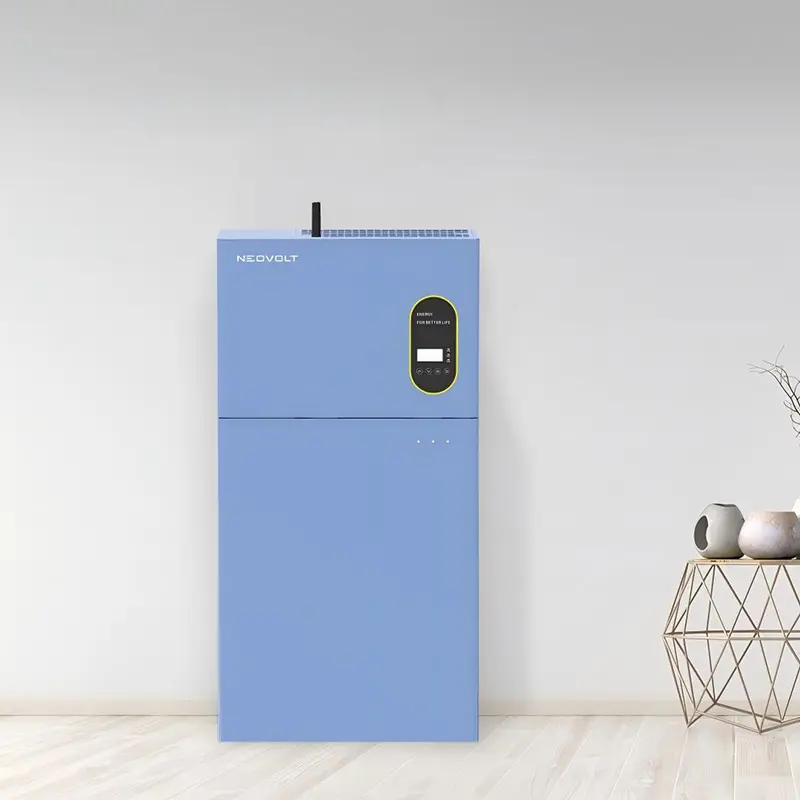
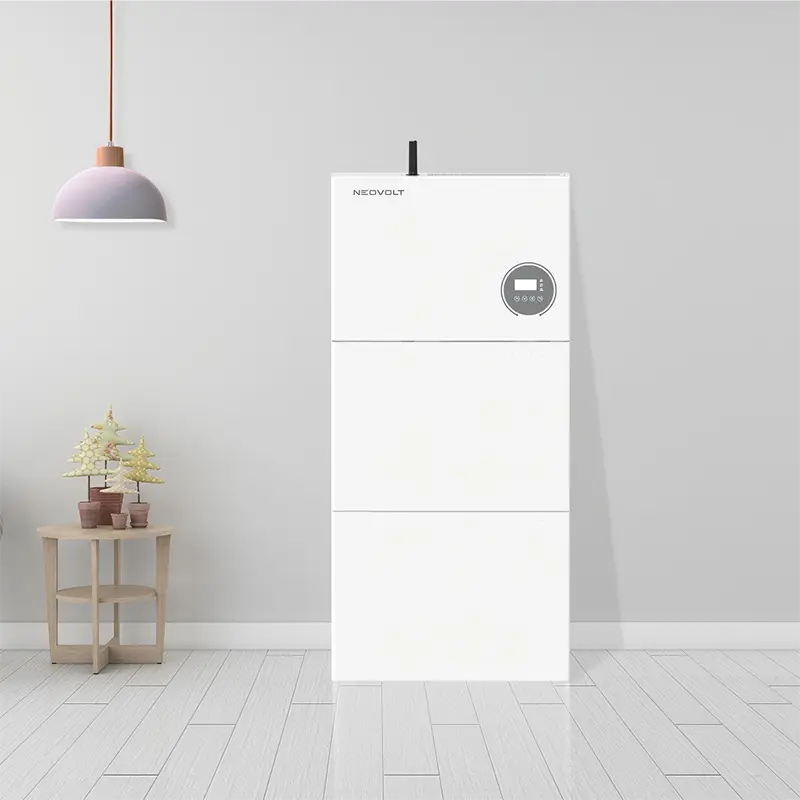
Sinoah Energy is a professional 100–300kWh Medium Commercial Storage manufacturer and supplier in China. We have an experienced sales team, professional technicians, and an after-sales service team.