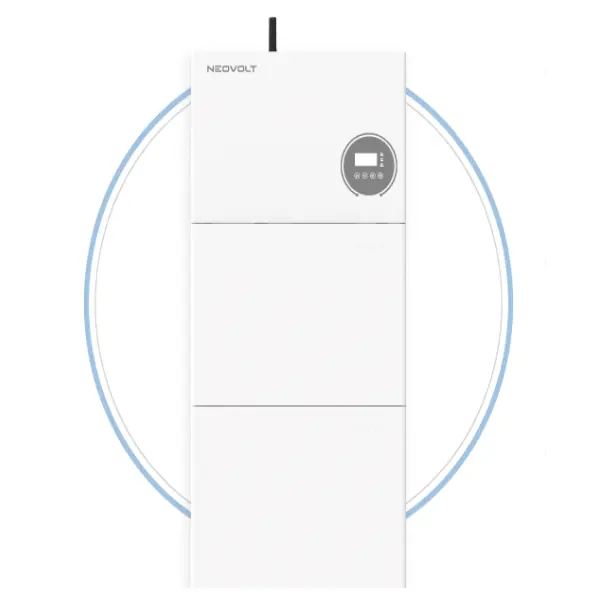
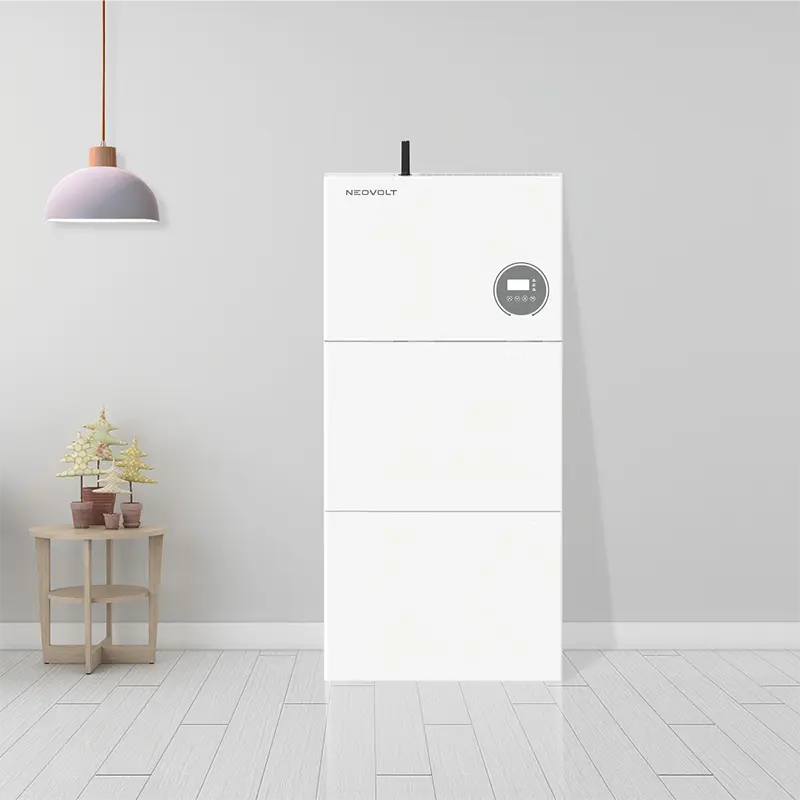
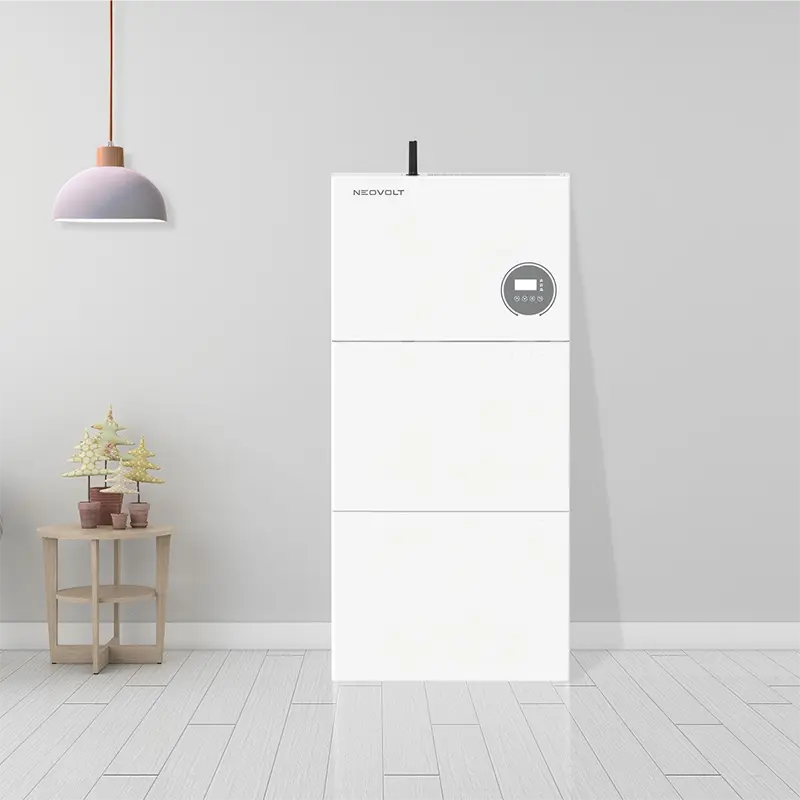
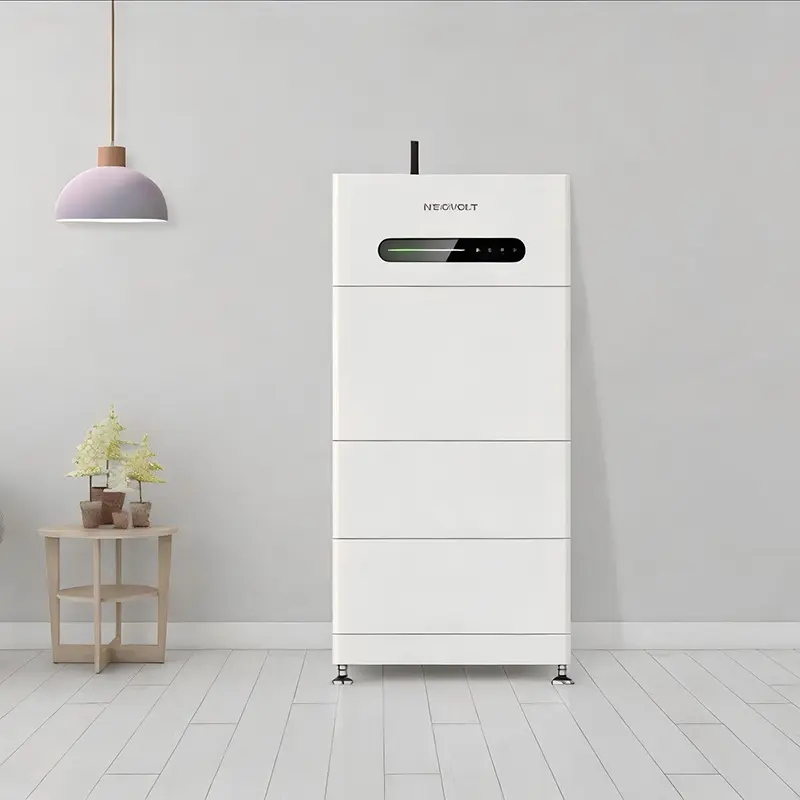
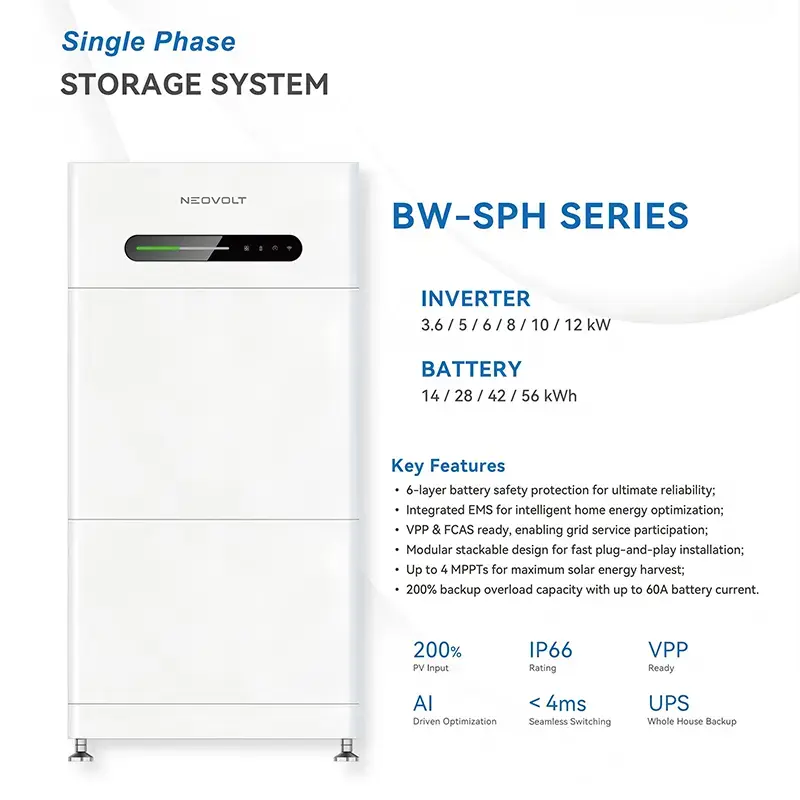
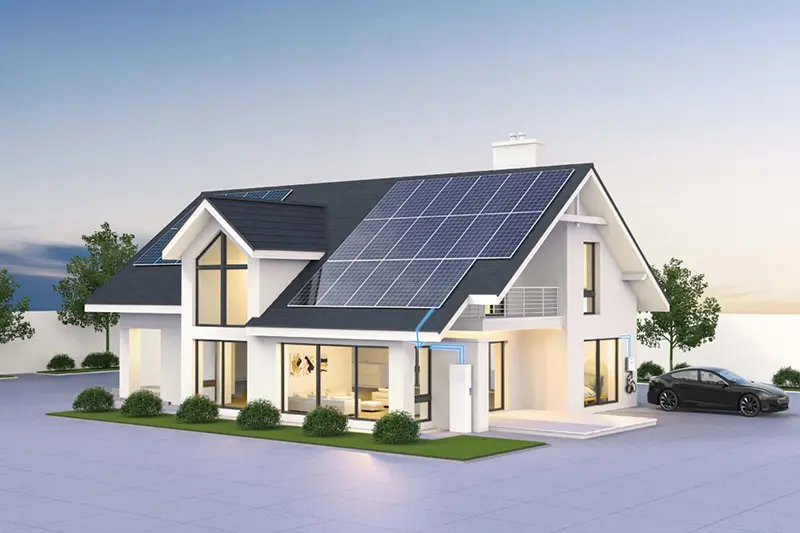
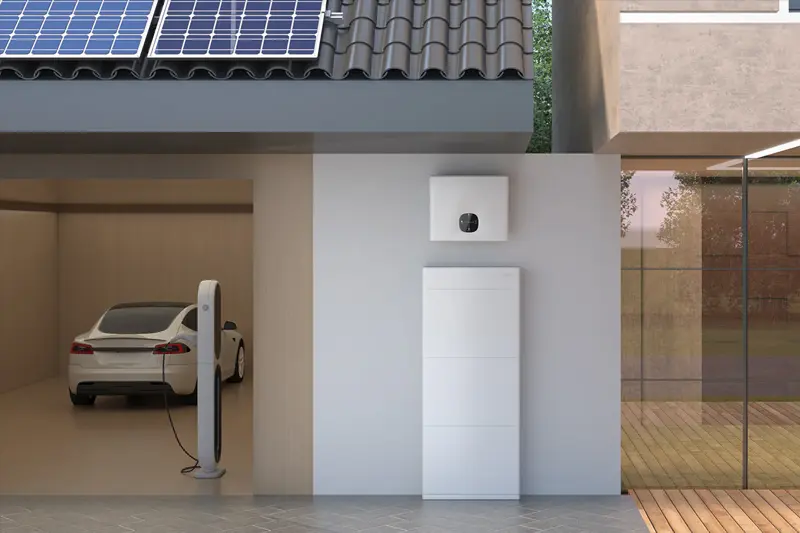
The single-phase hybrid inverter is an all-in-one solar-plus-storage device designed for residential and small commercial 220V single-phase applications. It integrates PV inversion, bidirectional battery charging/discharging, and grid-tied/off-grid/backup power capabilities. Compared to traditional grid-tied inverters, separate storage systems, and three-phase hybrid inverters, it offers multiple advantages, categorized here into six key dimensions:
I. High System Integration: Fewer Components, Lower Losses
All-in-one design eliminates the need for a separate energy storage converter
Traditional approach: Requires two separate units—a PV inverter and an independent energy storage PCS (Power Conversion System). The hybrid inverter features a built-in bidirectional DC/DC storage module, allowing PV, battery, and grid inputs to share a single main unit. This reduces the number of AC/DC conversion stages and line losses, achieving a peak system conversion efficiency of over 97.6%.
Multi-energy compatibility
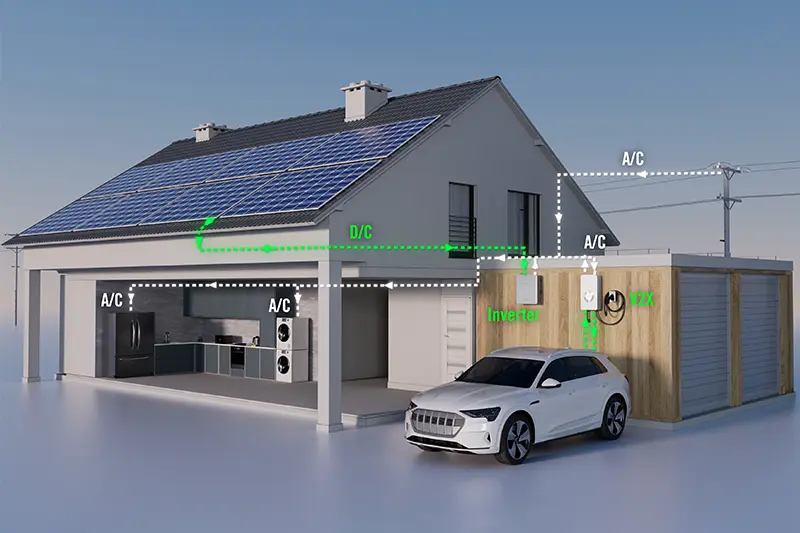
Simultaneously connects to PV arrays, lithium batteries, the utility grid, and backup generators. It automatically manages PV self-consumption, battery peak-shaving/valley-filling (charging/discharging), and grid supplementation, while supporting seamless switching between grid-tied, off-grid, and UPS backup modes.
Features integrated logic for load scheduling, peak-valley tariff arbitrage, and prioritizing battery storage for excess PV energy. No additional energy controller is required; a single-click setup enables "self-consumption, excess energy storage, and critical load protection during power outages."
II. Lower Costs and Simplified Installation (Key Advantage for Residential Use)
Low hardware procurement costs
Utilizes a simplified circuit topology with fewer components. The unit price is significantly lower than that of three-phase hybrid inverters and the "grid-tied inverter + independent PCS" split-system approach. The 3–10kW power range perfectly matches the typical installation requirements for residential solar systems.
Low barriers for wiring and installation
Outputs standard 220V single-phase three-wire power (Live/Neutral/Earth), aligning with standard household distribution boxes and meters. It eliminates the need for three-phase grid connections or phase-balancing adjustments. Fewer cables and circuit breakers are required, simplifying wiring and shortening the installation period.
Convenient O&M
Compact and lightweight unit designed for wall-mounting; centralized fault points allow for servicing a single unit without the need to coordinate complex multi-device debugging. Supports remote monitoring via Wi-Fi/Bluetooth and OTA online upgrades; users can view power generation, battery status, and consumption profiles via a mobile app.
III. Suitable for the Vast Majority of Domestic Residential Power Scenarios
Residential and small commercial compatibility
Most commercial housing, self-built homes, and small street-front shops utilize a single-phase 220V grid connection, lacking the infrastructure for three-phase power.
Perfectly compatible with all single-phase loads, including air conditioners, refrigerators, water heaters, and other household appliances.
Provides power to critical loads (such as refrigerators, lighting, and security systems) during outages; supports short-term surge loads up to twice the rated power to handle the high starting currents of air conditioners and water pumps.
No need to modify existing household wiring; retrofitting PV storage in older homes avoids the need to apply for a three-phase capacity upgrade, significantly reducing renovation costs.
IV. Safe, Reliable, and Comprehensively Protected
Comprehensive electrical protection
Features AC and DC side lightning and surge protection; comes standard with protections against over-voltage, over-current, short-circuit, anti-islanding, high temperature, and battery reverse polarity. Optional AFCI (Arc-Fault Circuit Interrupter) detection eliminates DC fire hazards.
Low-voltage battery safety advantage
Higher safety profile due to low-voltage battery design (utilizing mainstream 48V low-voltage lithium batteries); compared to high-voltage three-phase storage systems, the lower DC-side voltage reduces the risk of electric shock, making it safer for home use.
Stable backup power performance
Outputs a pure sine wave in off-grid mode, preventing damage to sensitive electronics like TVs and computers; switches to backup power within milliseconds of a grid outage, ensuring uninterrupted operation.
V. Higher Returns and Flexible Energy Optimization
Maximized PV self-consumption
Stores excess PV energy generated during the day in the battery for use at night, significantly reducing reliance on grid power; discharges battery power during peak tariff periods and charges from the grid during off-peak periods to achieve electricity cost arbitrage.
Emergency backup during outages
Standard grid-tied inverters shut down immediately during power outages; this single-phase hybrid inverter features built-in UPS functionality, allowing it to independently power loads during outages caused by typhoons or maintenance—ideal for rural self-built homes and areas prone to frequent power cuts.
Flexible capacity expansion
Most models support parallel expansion, allowing for increased PV capacity without replacing the entire unit. Dual-channel MPPT tracking accommodates PV panels facing different directions, thereby maximizing solar energy utilization.
VI. Compact Size and Versatile Installation
Wall-mounted and outdoor-ready design
The unit features a wall-mounted design with IP65 outdoor protection, suitable for installation on exterior walls, balconies, or in utility rooms. It has a small footprint and does not take up indoor storage space, making it ideal for compact homes and shops with limited equipment areas.
Silent operation
It utilizes natural convection for heat dissipation—eliminating noisy fans—to ensure a quiet home environment.
We use cookies to offer you a better browsing experience, analyze site traffic and personalize content. By using this site, you agree to our use of cookies.Privacy Policy