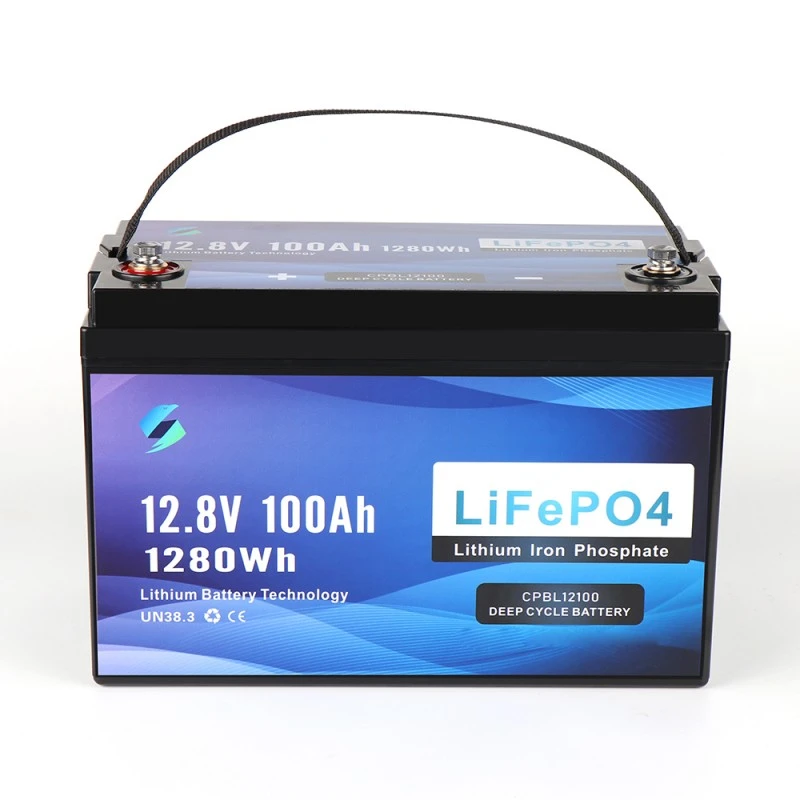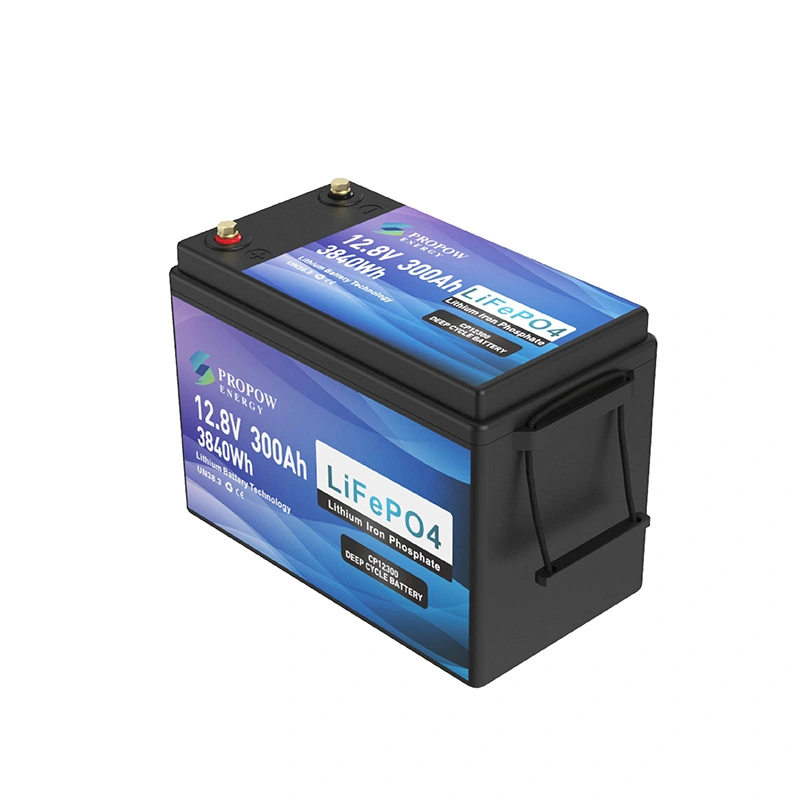

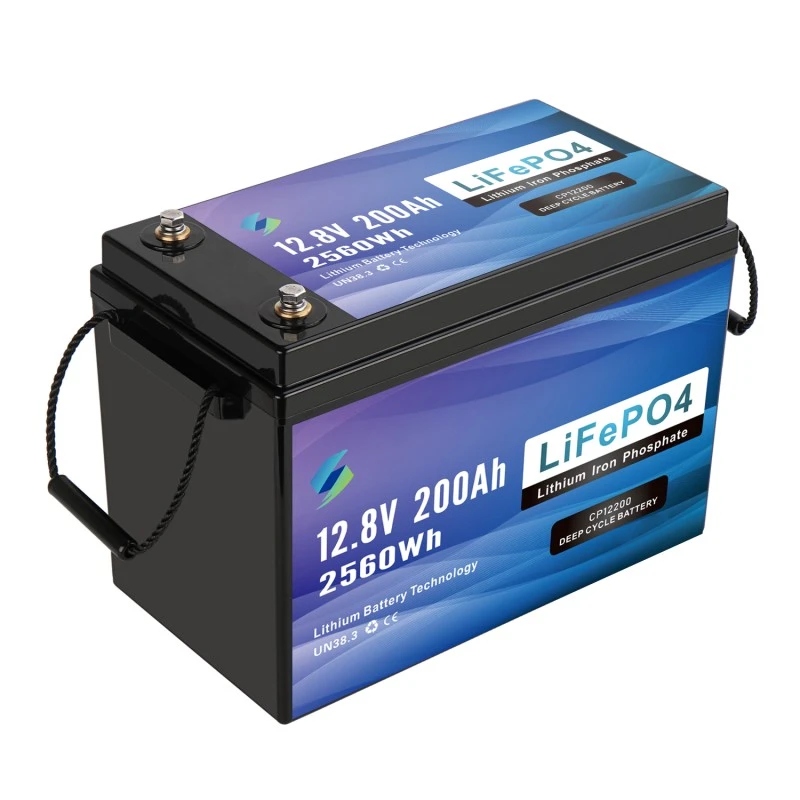
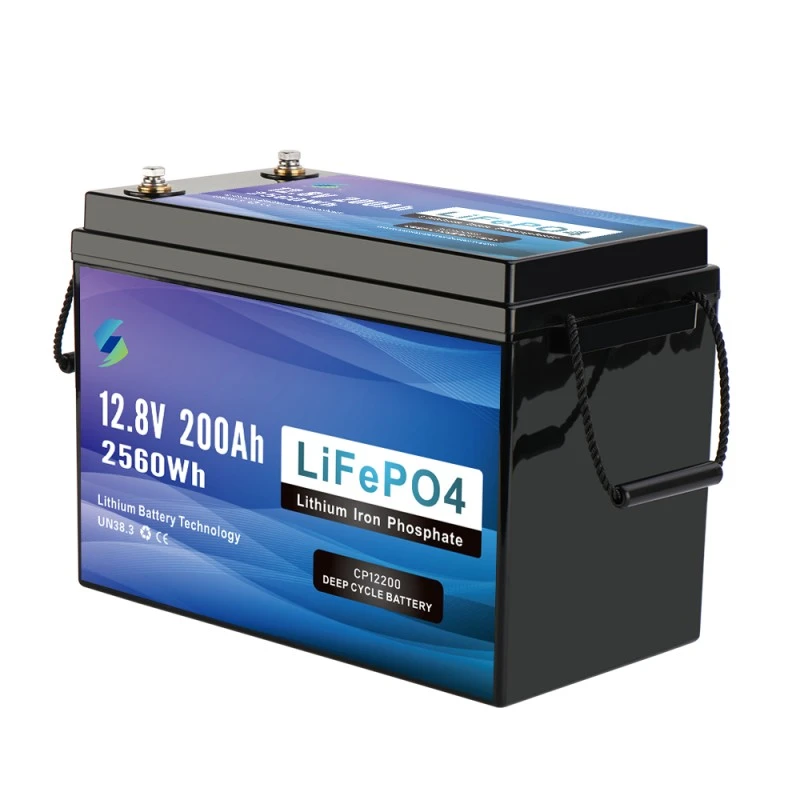
12.8V 200Ah Marine LiFePO4 Battery
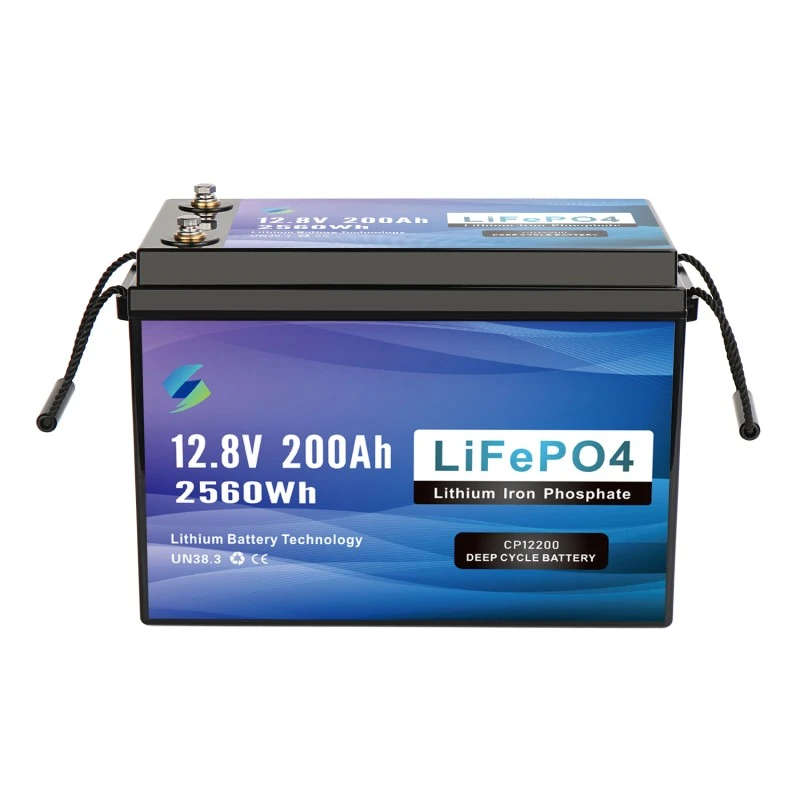
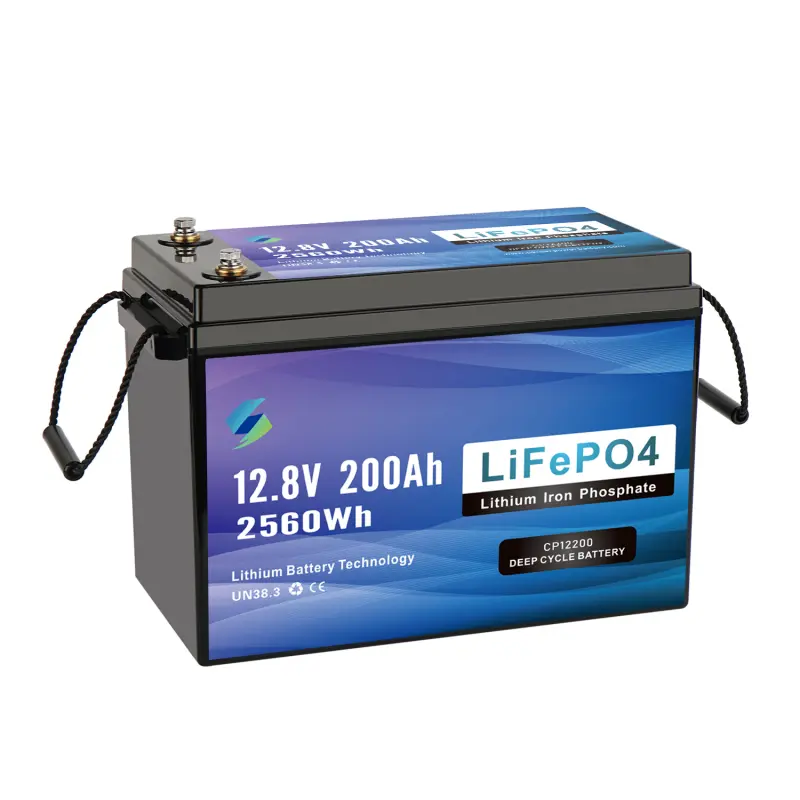
Sinoah Energy, a UK supplier, supplies the 12.8V 200Ah Marine LiFePO4 Battery for long days offshore and liveaboard moorings: 2.56kWh in one sealed unit, at roughly 40% of the weight of the lead-acid capacity it replaces. The case is sealed to IP67 and monitored over Bluetooth with an audible alarm, and the cells hold above 3000 cycles at 70% depth of discharge. UN38.3 certified, 8-year warranty.
The 12.8V 200Ah Marine LiFePO4 Battery is the high-capacity unit in the Sinoah Energy marine range. It is used where a single battery has to carry a day of trolling, overnight refrigeration and navigation electronics without being recharged, and where two or three smaller units would otherwise be needed to reach the same capacity.
Capacity of this size suits liveaboard house banks, fishing boats making long days offshore, ribs with heavy electronics, and narrowboats running domestic loads between engine hours. Because the chemistry accepts deep discharge without damage, the usable energy is close to the rated figure - unlike a lead-acid bank, where half the capacity is typically unavailable.
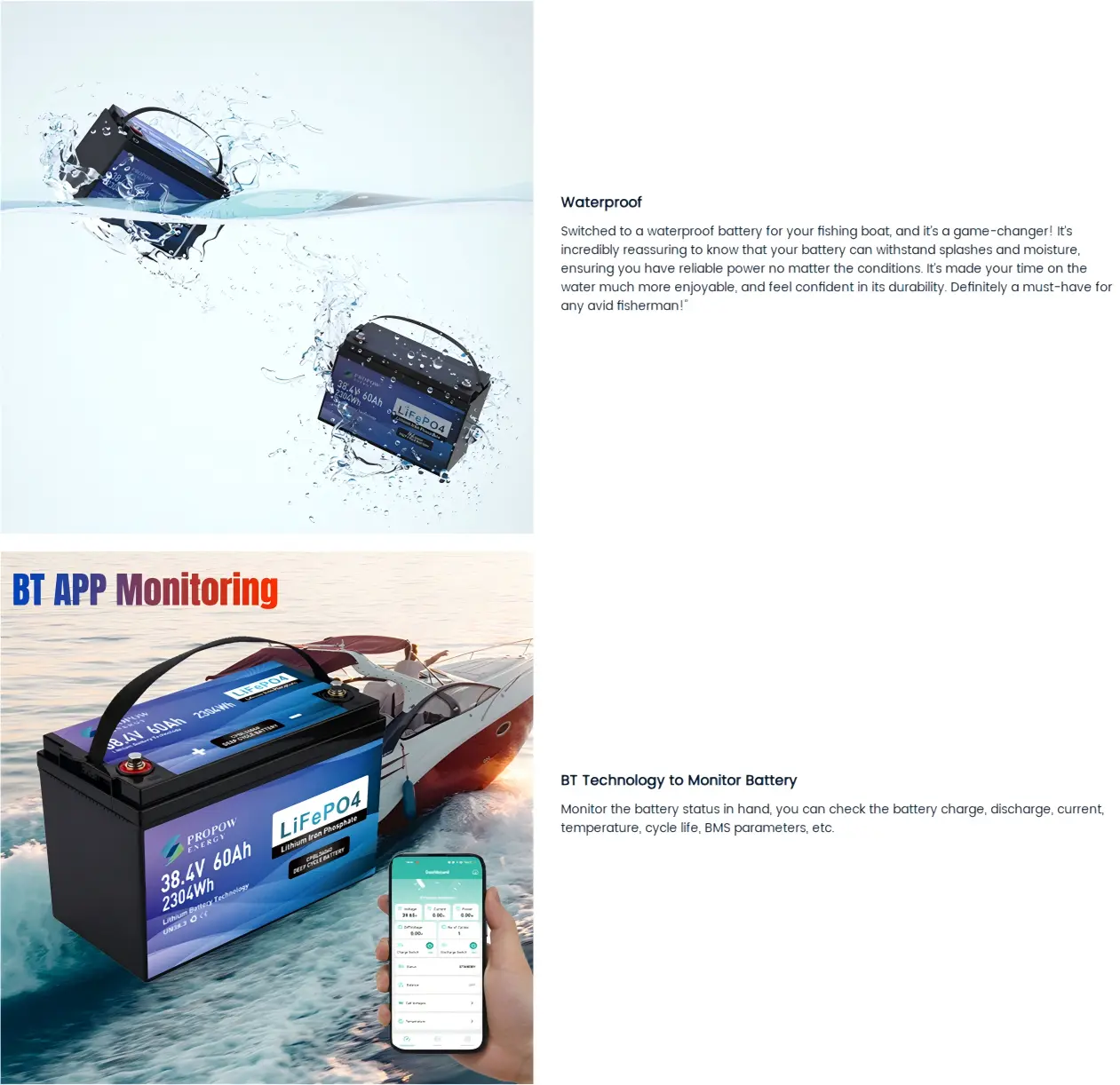

Why 200Ah: Capacity for Long Days and Off-Grid Moorings
Battery capacity on a boat is set by daily consumption, not by boat length. A day's use of a trolling motor, a fridge, LED lighting, a chart plotter and a VHF radio commonly draws 60Ah to 120Ah, so a single 200Ah unit covers a full day while leaving reserve. That reserve matters when the weather delays a return or when a mooring has no shore power.
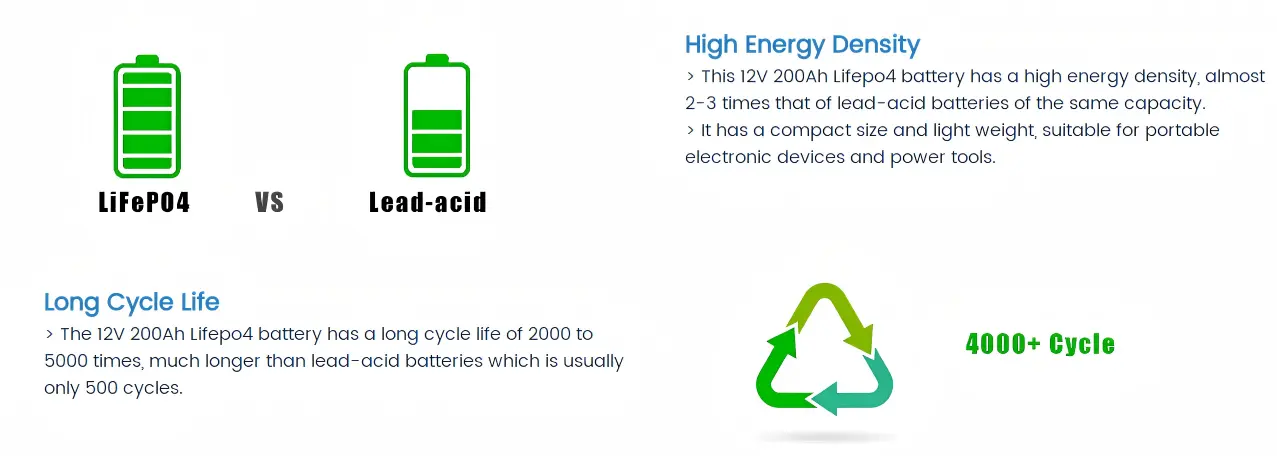
The comparison with lead-acid is where the capacity figure becomes misleading. A 200Ah lead-acid battery at 50% depth of discharge offers about 100Ah of usable energy, weighs around 60kg, and loses capacity each season. A 200Ah LiFePO4 unit offers roughly 160Ah usable at 80% discharge, weighs about 24kg, and holds its capacity across the cycle life.
Technical Specifications
|
Parameter |
Specification |
|
Rated voltage |
12.8V (4S LiFePO4) |
|
Rated capacity |
200Ah |
|
Rated energy |
2.56kWh |
|
Chemistry |
LiFePO4 (LFP) |
|
Cycle life |
>3000 cycles at 70% DoD |
|
Depth of discharge |
up to 80% in normal marine duty |
|
Ingress protection |
IP67 (sealed, wash-down safe) |
|
Terminals |
M8 threaded |
|
Maximum charge current |
100A |
|
Maximum continuous discharge |
150A |
|
Peak discharge (short duration) |
200A |
|
Monitoring |
Bluetooth real-time monitoring with audible alarm |
|
Protection |
Over-charge, over-discharge, over-current, short circuit, over-temperature |
|
Series / parallel |
Series up to 48V, parallel for larger banks |
|
Weight |
approx. 24kg (vs approx. 60kg lead-acid) |
|
Certification |
UN38.3, UL1642 |
|
Warranty |
8 years |
House Bank Sizing
|
Daily consumption |
Recommended bank |
Usable capacity |
|
Up to 60Ah (day boat, motor only) |
1 x 200Ah |
approx. 160Ah |
|
60-120Ah (fridge, electronics, trolling) |
1 x 200Ah |
approx. 160Ah |
|
120-240Ah (liveaboard, inverter loads) |
2 x 200Ah in parallel |
approx. 320Ah |
|
240-400Ah (narrowboat domestic bank) |
3 x 200Ah in parallel |
approx. 480Ah |
The bank should be sized from a measured daily consumption figure rather than from the boat length. Where consumption is not yet known, the app monitoring on a first unit records the daily draw, and additional batteries can be added in parallel once the real figure is clear.
Parallel Banks and Isolation
Parallel connection is made through a busbar with each battery individually fused, so one unit can be isolated for maintenance without shutting down the boat. Because each battery carries its own BMS, a fault in one unit is reported by the app and the remaining batteries continue to supply the load.
Charging a parallel bank requires a charger capable of the combined current, and a lithium profile matched to the bank size. Where the boat has an alternator, an external regulator or a DC-DC charger is normally fitted to protect the alternator from the low internal resistance of the lithium bank.
Applications
The 12.8V 200Ah Marine LiFePO4 Battery suits offshore fishing boats running trolling motors, sonar and refrigeration through a long day.
Liveaboard yachts and narrowboats using battery power for domestic loads between engine hours.
Ribs and motorboats with heavy electronics, and motorhomes and off-grid properties using the same 12V architecture.
Winter Storage and Maintenance
The battery can be left in the boat over winter if it is charged to about 60% and disconnected, since the BMS prevents over-discharge while the boat is laid up. Where the boat is stored ashore in freezing conditions, the battery should be brought into a dry store above freezing rather than left in a cold locker.
There is no electrolyte to check and no equalising charge to run. The routine is limited to keeping the terminals clean and checking the Bluetooth monitor before the season starts, which shows the state of charge and cell balance of every connected unit.
Why Choose Sinoah Energy
Sinoah Energy is a UK-based supplier of LiFePO4 batteries and hybrid inverters, holding marine battery stock in the UK for boat owners, yards and dealers. The range is manufactured to UN38.3 and UL1642 standards by NeoVolt, and trade customers can request OEM or ODM customisation for branded cases or specific terminal arrangements.
Support covers bank sizing, charger and alternator matching before the order, and continues after delivery with app-based diagnostics, UK warranty service and dealer pricing on monthly supply.
Cable and Fuse Sizing for a 200Ah Bank
A 200Ah battery at 12.8V carries twice the current of a 100Ah unit for the same load, so the cable and fuse rating matter as much as the battery itself. For a trolling motor drawing 50A, cable of 16mm2 is normally sufficient over a short run, and the fuse is sized slightly above the maximum continuous draw of the circuit rather than above the battery rating.
Where the battery also feeds an inverter, the cable is sized on the inverter input current, which is much higher than the motor draw, and the run is kept as short as possible. Every cable in the bank is fused at the battery end so a short circuit cannot draw on the full energy of the pack.
FAQ
Q: How long will the 12.8V 200Ah Marine LiFePO4 Battery run a boat through the day?
A: A typical day of trolling, refrigeration and electronics draws 60Ah to 120Ah, so one unit covers a full day with reserve. Consumption varies with the motor and fridge duty.
Q: Can I connect it in parallel with a smaller battery?
A: Batteries in a bank should be the same model, age and capacity so the BMS units share the load evenly. Mixed banks are not recommended.
Q: Is it too heavy to move by hand?
A: At approximately 24kg it is manageable for one person, and it is roughly 40% of the weight of the lead-acid capacity it replaces.
Q: What charger do I need?
A: A charger with a LiFePO4 profile and enough output for the bank size. For alternator charging, a DC-DC charger or external regulator is normally fitted.
Q: Does it need ventilation?
A: No gas is produced, so no ventilated box is required. Airflow is still useful to keep the unit cool during fast charging.
Q: What warranty applies?
A: 8 years, with app-based diagnostics and warranty service handled in the UK.
Hot Tags: 12.8V 200Ah Marine LiFePO4 Battery, China, Manufacturer, Supplier, Factory
Send Inquiry
Contact Info
-
Address
Neo bankside, 50 Holland Street, London, SE1 9FU, United Kindom
-
Tel
-
Email
If you have any inquiry about a quotation or cooperation, please feel free to email or use the following inquiry form. Our sales representative will contact you within 24 hours.